

Lighting fixtures in 19th-century France
06.11.20
19TH CENTURY CHANDELIERS
A chandelier is a piece of furniture designed to capture light and enhance the brightness of an interior. It can already be found in the Middle Ages, made of wood and equipped with candles. From the Renaissance onward, chandeliers were made of metal and their shapes diversified. At the same time, their size increased, and they became a symbol of luxury and wealth .
In 17th-century Versailles , chandeliers Louis XIV 's guests , particularly in the Hall of Mirrors, thanks to their shimmering light and the richness and quality of the crystal. Noble materials like crystal embellished these sumptuous decorative objects for decades. Crystal drops, rosettes, prisms, pendants, and beads formed rich designs, supported by gilded frames.
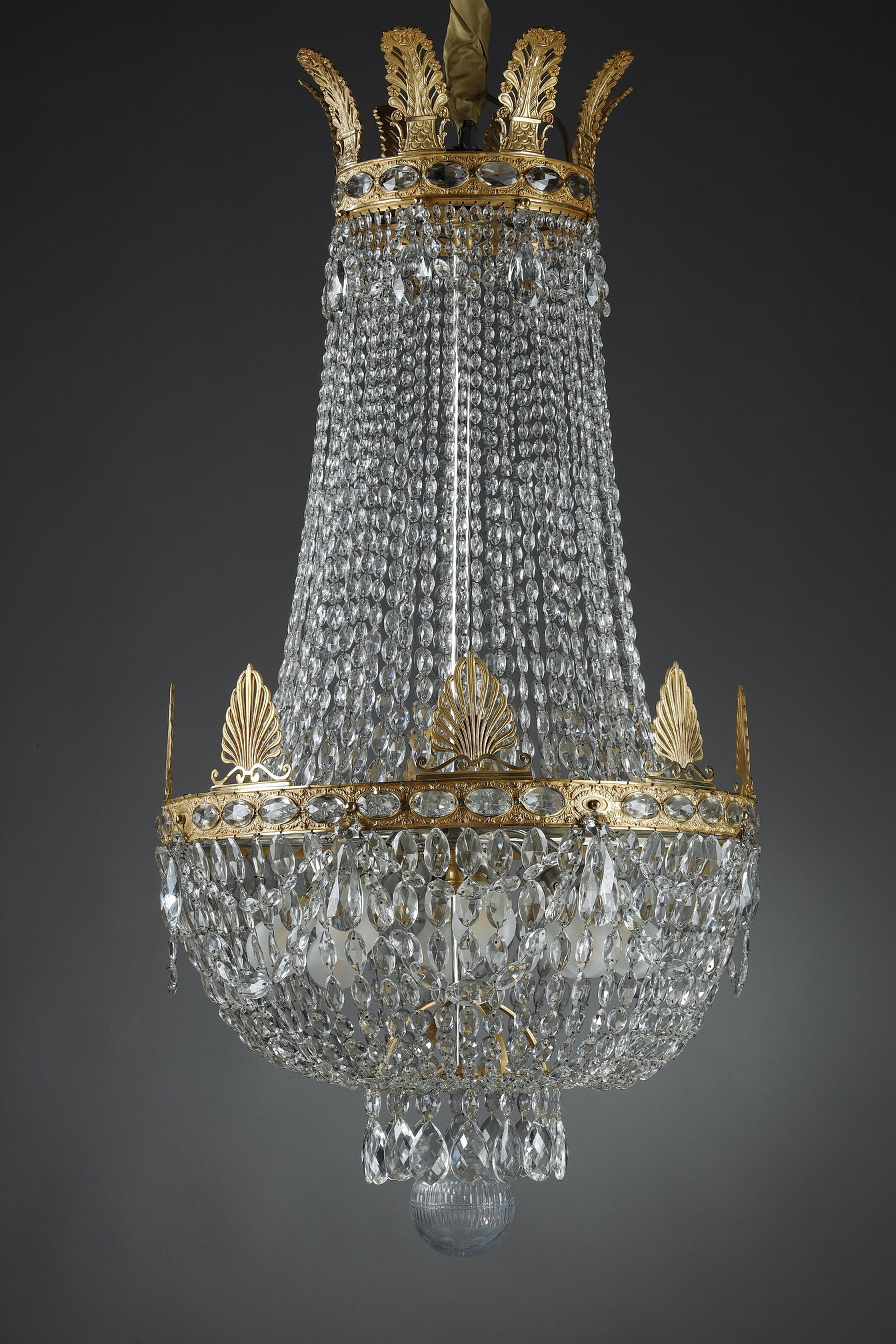
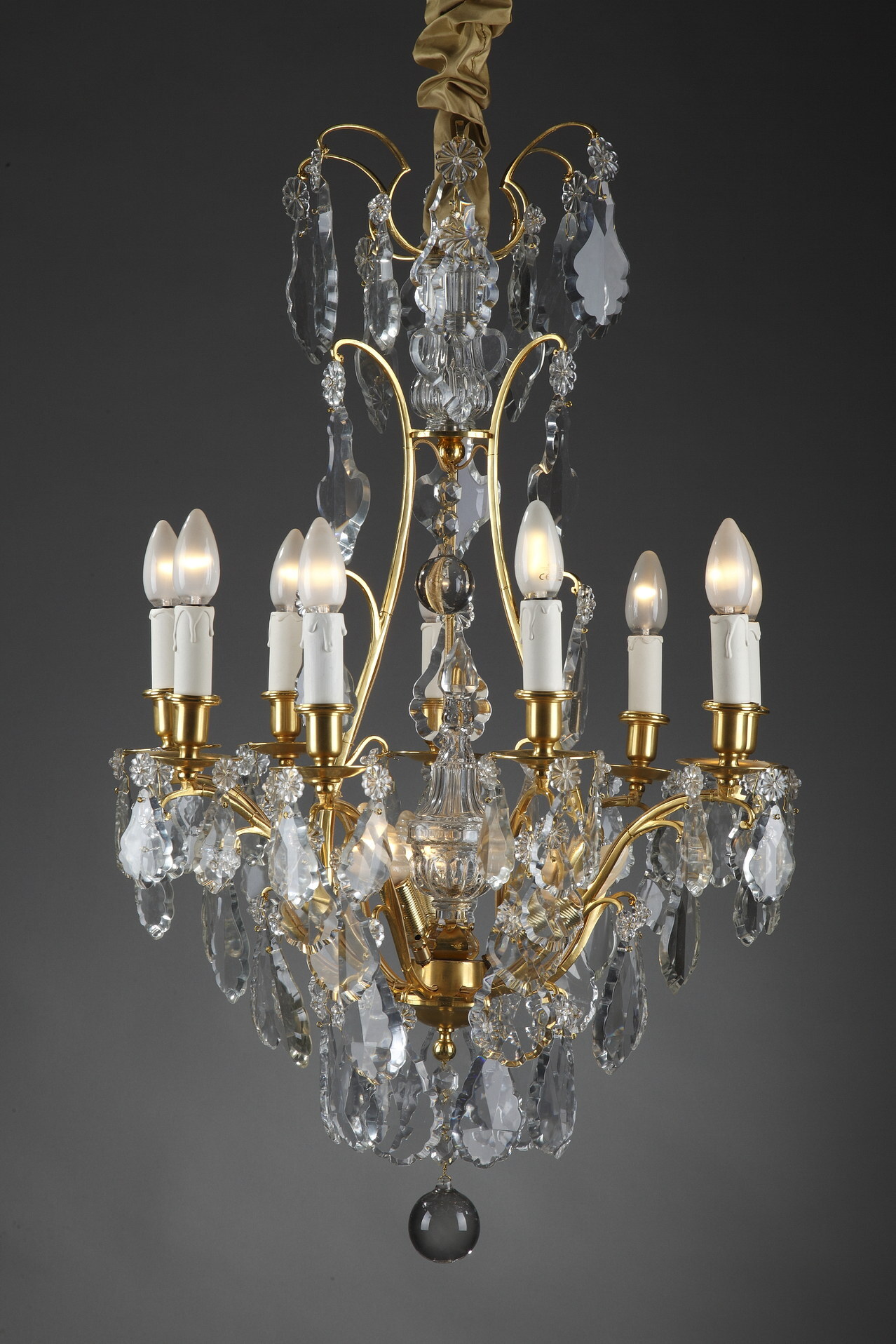
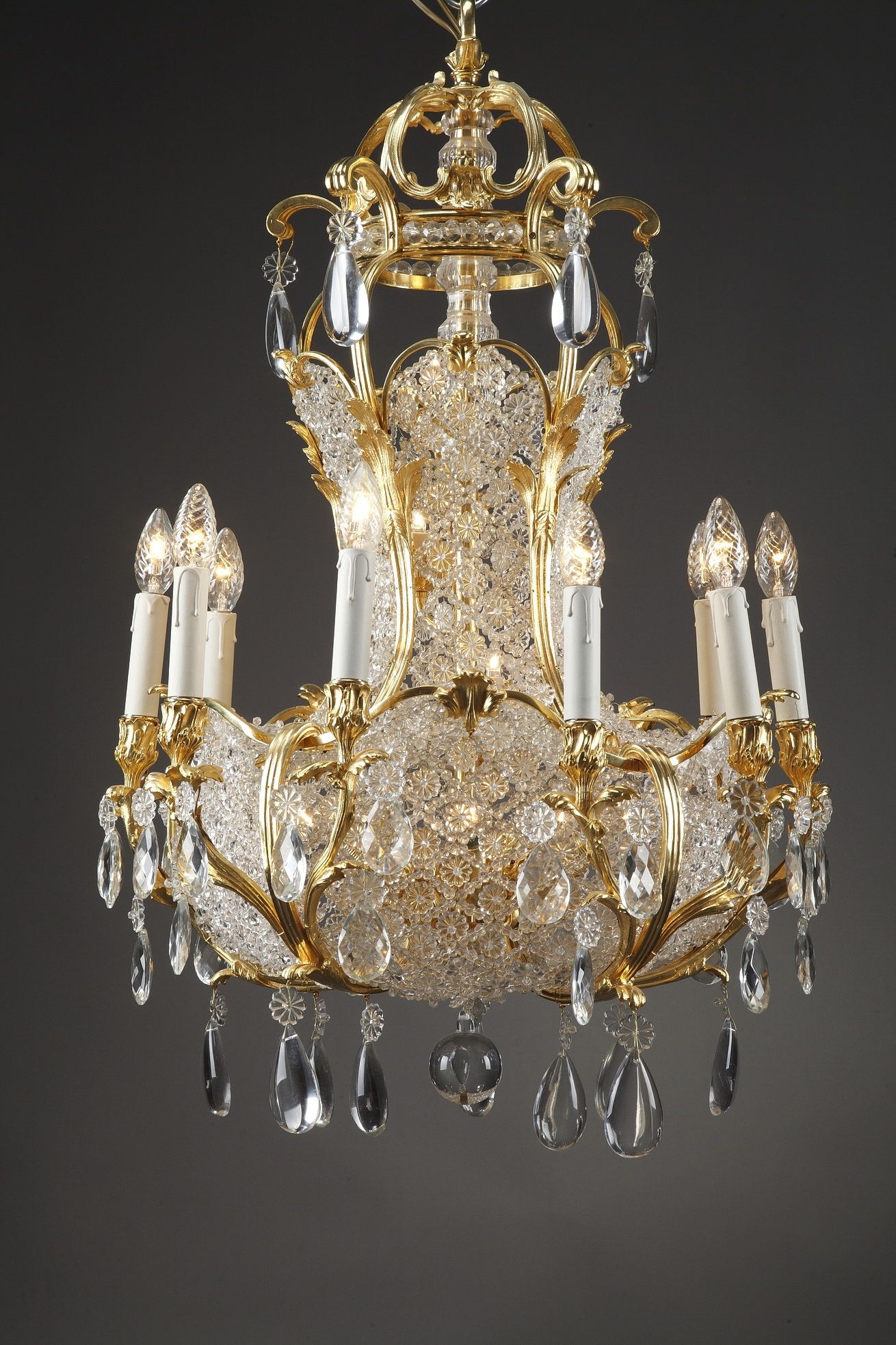 Crystal and gilt bronze basket chandelier
In the 19th century, chandeliers appeared, replacing candles with gas lighting . A true revolution, as it eliminated the need to lower the chandelier to light it. By the end of the 19th century, candles were definitively replaced by light bulbs thanks to the advent of electricity .
Lighting is a central decorative object, its forms and designs evolving over time. While the Louis XVI era and the early 19th century favored basket-shaped chandeliers and models with symmetrical, flowing forms, the Napoleon III period saw the return of the exuberance of the Rococo style Louis XIV -Mazarin and Louis XVI models , the latter being especially appreciated by Empress Eugénie. Porcelain, alabaster, opaline glass, Bohemian crystal, and Baccarat crystal were used with great ingenuity by the artisans of the time, who produced sumptuous and sometimes surprising designs.
19th Century Castle Chandeliers
Chandeliers were first used in castles and the reception halls of prestigious buildings such as theaters, opera houses, and administrative buildings. Their monumental size corresponds to the high ceilings that characterize these historic buildings. Some models feature numerous light arms and opulent decoration. For example, our 10-light basket chandelier is richly adorned with a curtain of crystals: prisms, plaques, rosettes, and pendants, which form a delicate latticework.
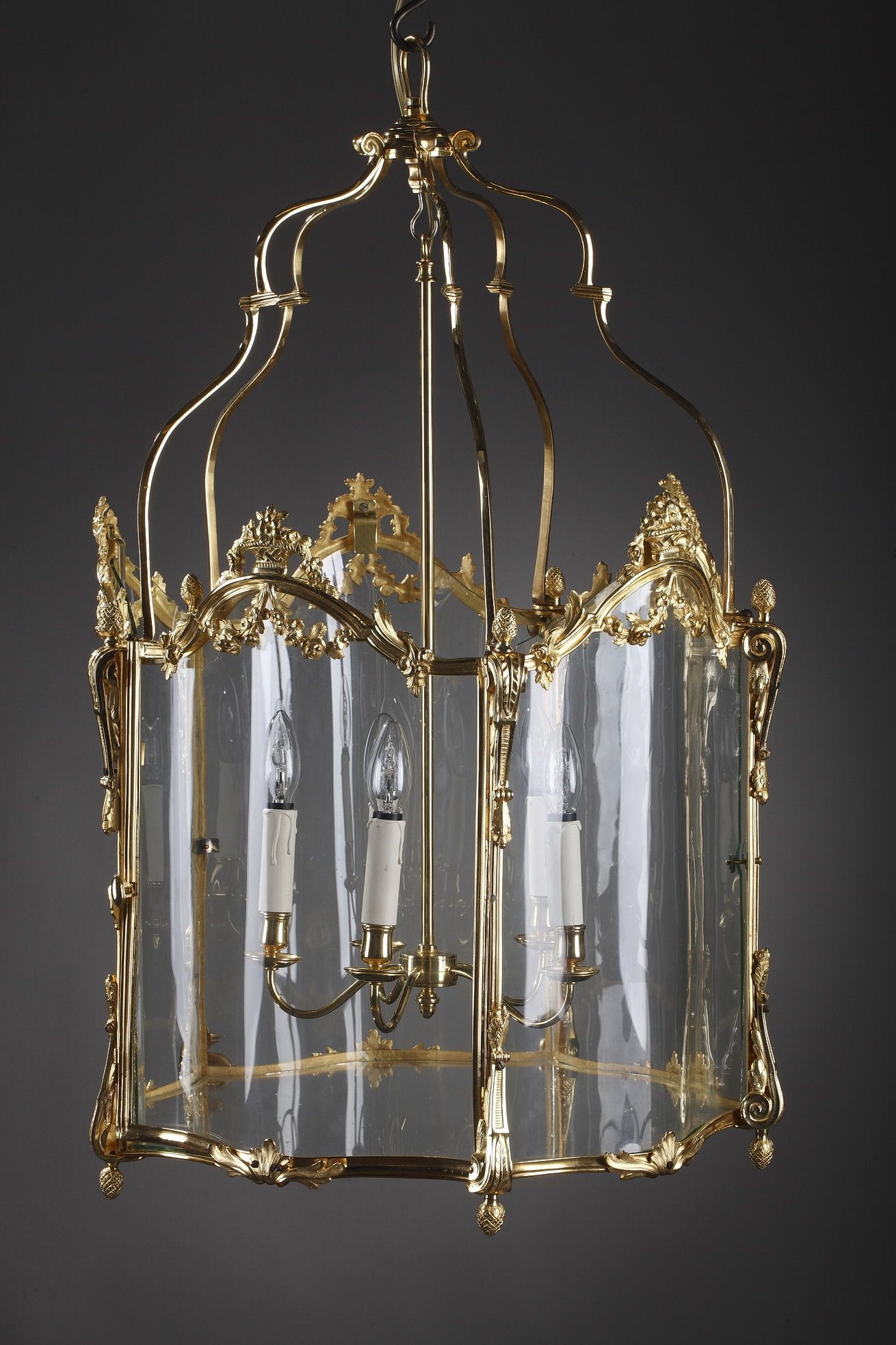 Large lantern of Leoube Castle in Bromes
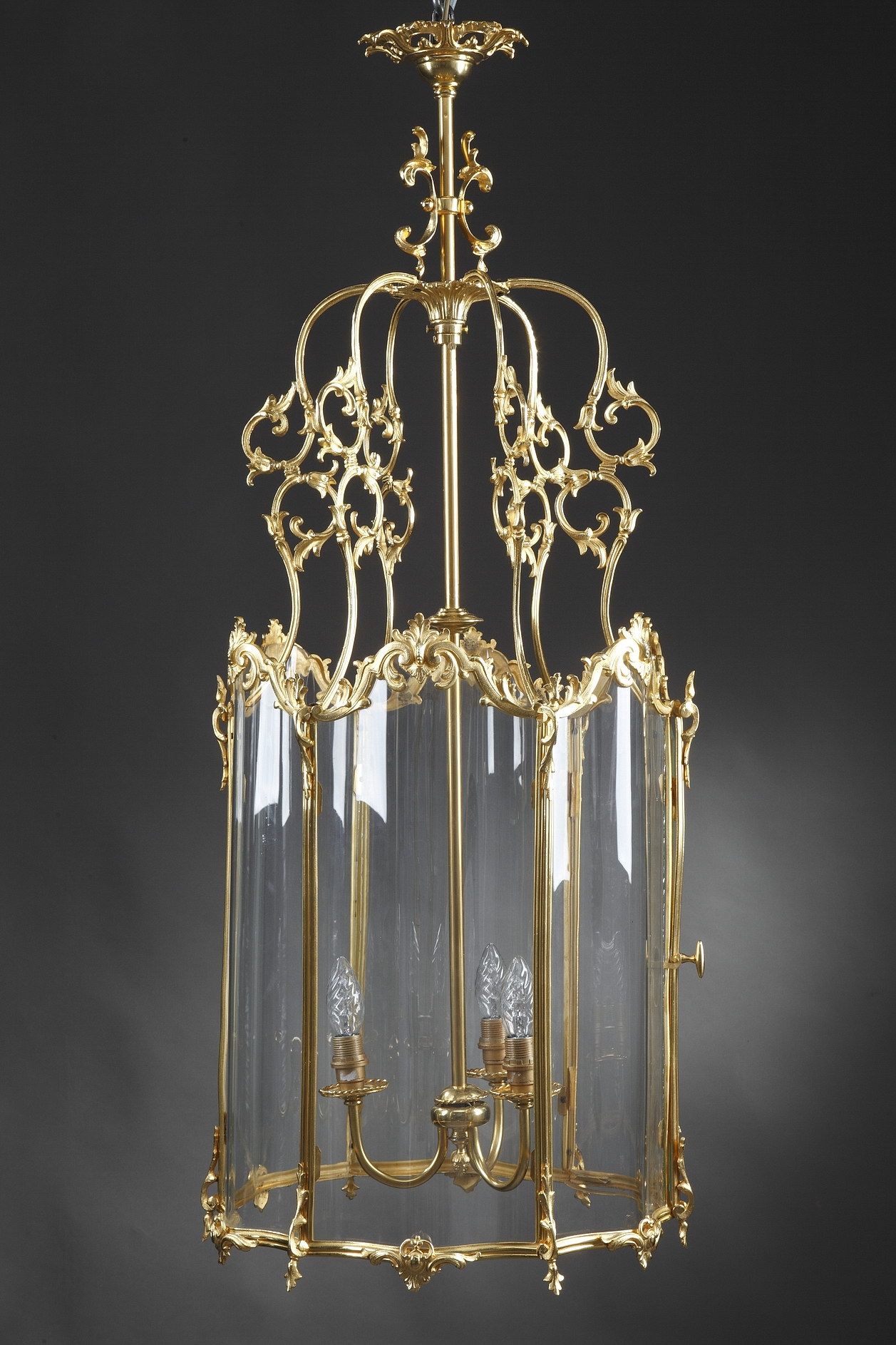
In addition to chandeliers, ovoid or polylobed lanterns adorn entrance halls. Galerie Atena owns a Napoleon III period model from the Château Léoube in Bormes-les-Mimosas , in the Var region. This large gilt bronze vestibule lantern, inspired by the Louis XV style, retains its original curved glass. Decorated with floral baskets and garlands, this lantern pendant illuminates with five lights.
View the chandelier collection
19TH CENTURY CANDLESTICKS & CHANDELIERS
The candlestick is a more intimate object. Small in size, it is used in all rooms of the house, even the bedroom. As we saw earlier, throughout the 18th and early 19th centuries, candlelight was an integral part of home furnishings. The candlestick, which can be easily carried and moved, sits on bedside tables , dining tables , mantelpieces in living rooms, or on small pieces of furniture made specifically for them. They are part of dressing tables or writing desks.
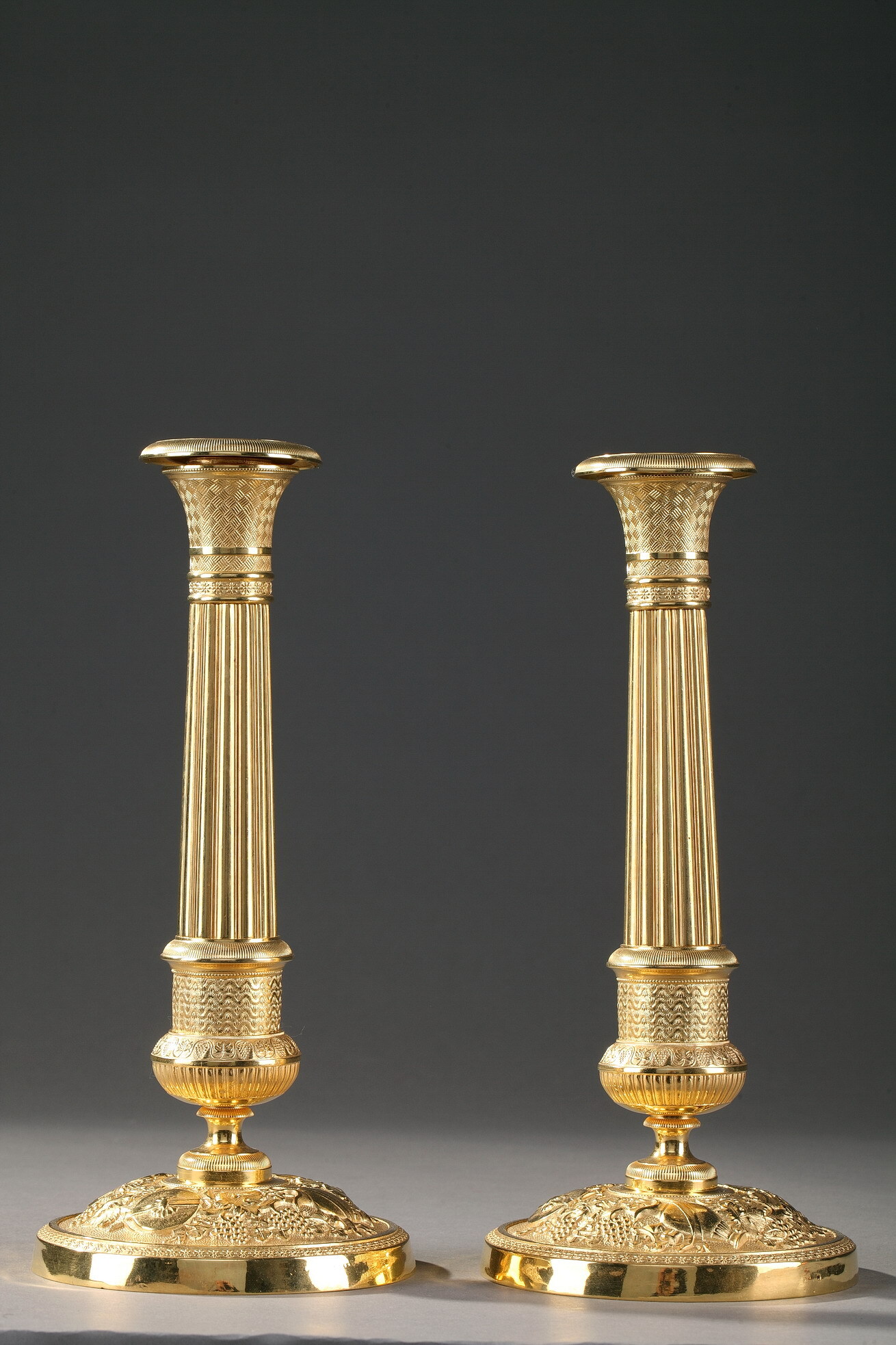
Pair of 19th-century bronze candlesticks
The candlestick consists of a more or less tall stem resting on a base and topped with a socket, sometimes complemented by a fixed or movable drip tray. The socket may have one or two small side openings allowing the remaining candle wax to be removed.
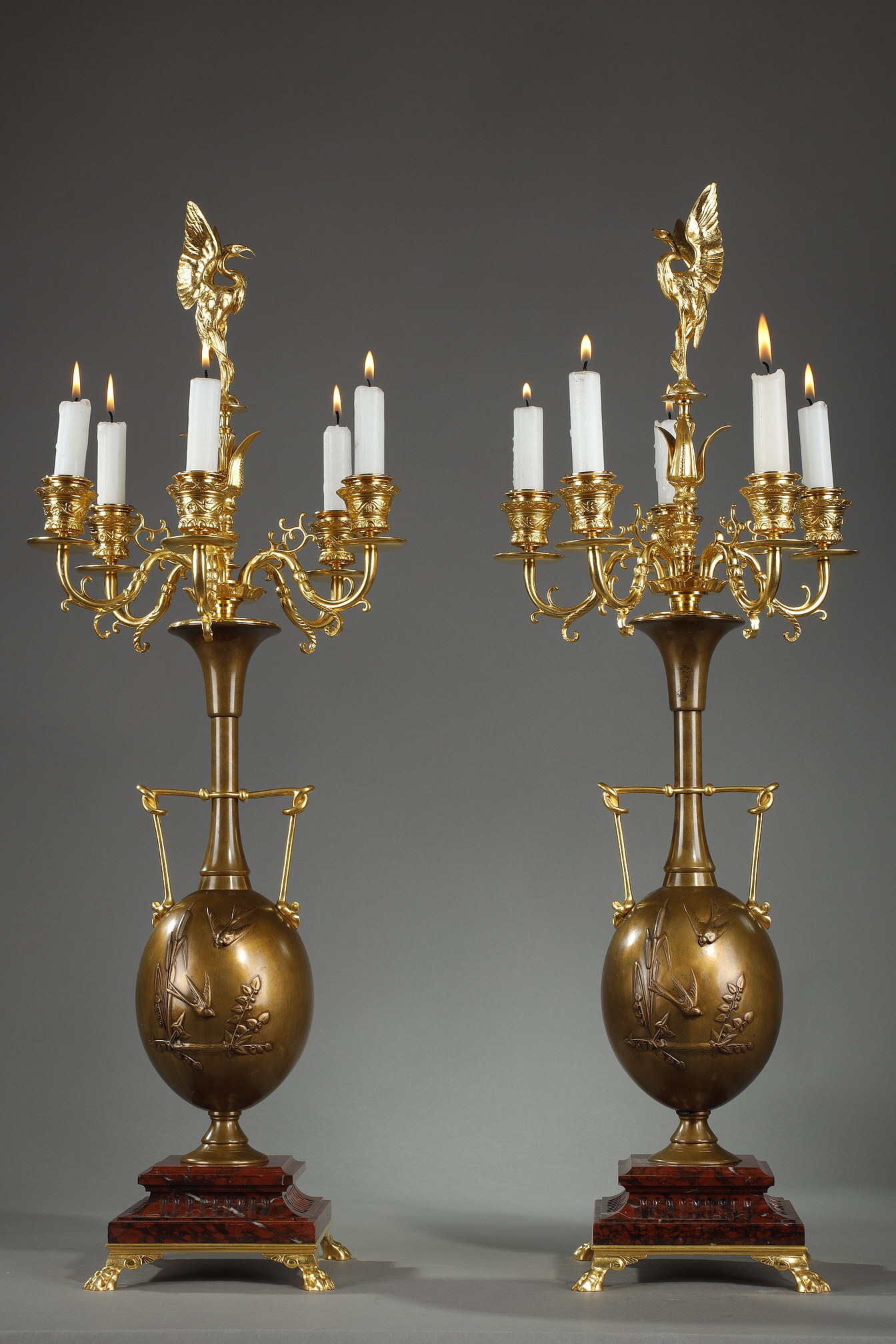
Candlesticks share this structure but are larger and more elaborately decorated. Like candlesticks, they are an integral part of interior design and lend an undeniable splendor to family meals, celebrations, and ceremonies. With multiple arms, they are decorated with floral or animal . Some exceptional models are adorned with allegorical or mythological figures, while others are shaped like a vase from which flowers emerge, forming the arms of light.
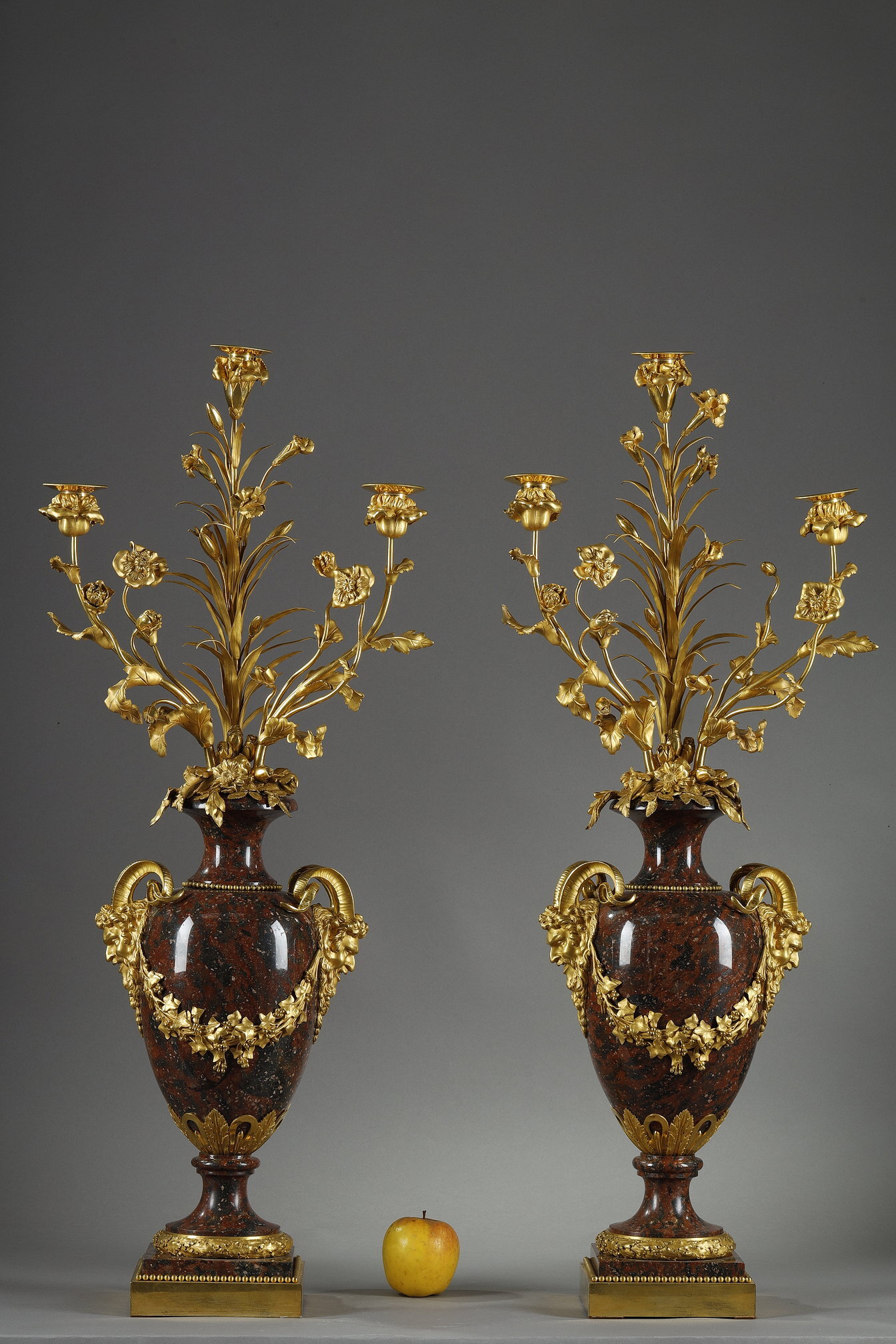
Pair of Louis XVI style candelabra
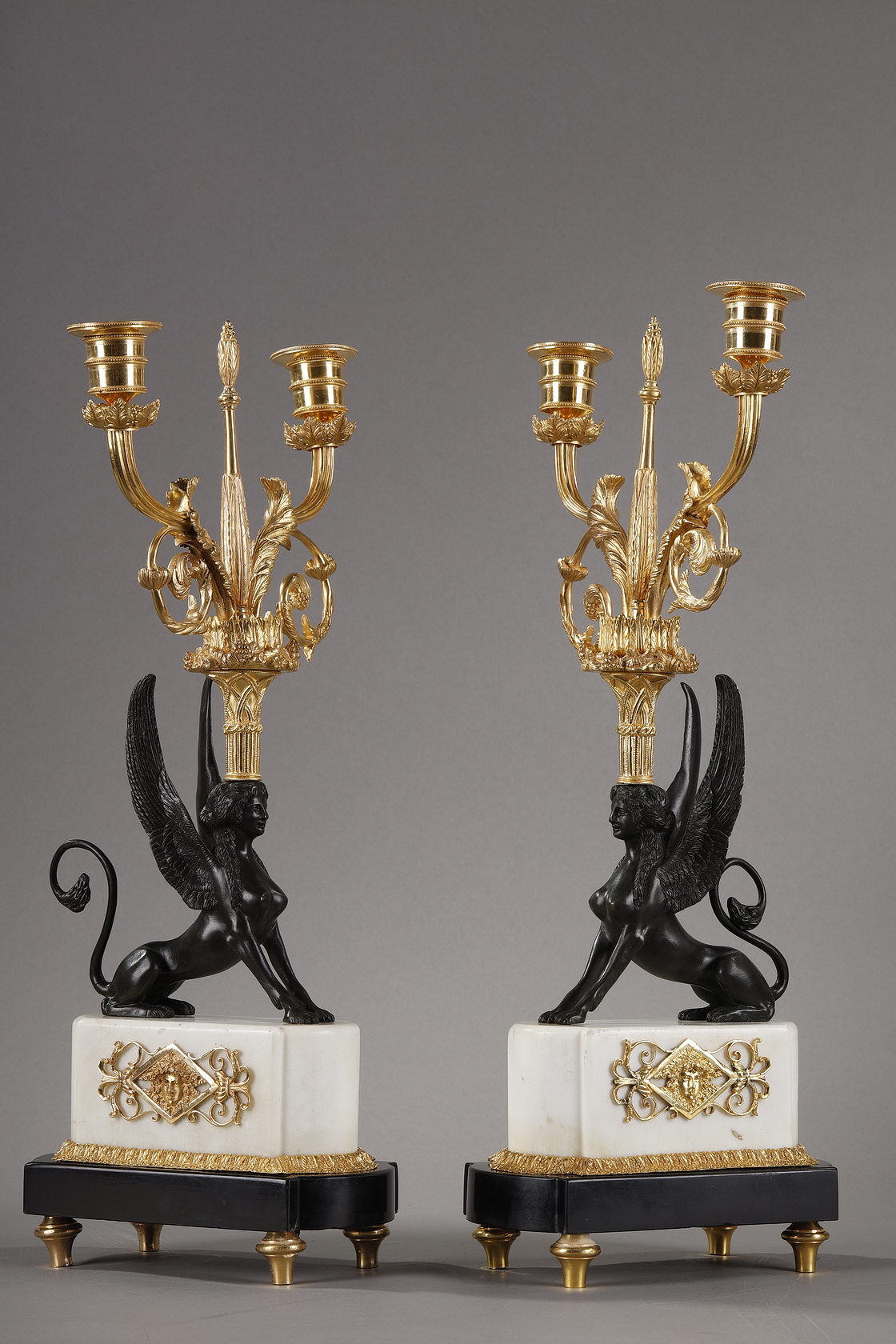
There are many types of candlesticks, whose names reflect their use: table candlesticks , screen candlesticks, travel candlesticks, gaming table candlesticks , and so on. Candlesticks are moved less frequently and can reach impressive sizes. In the second half of the 19th century, metal or porcelain vases were repurposed as lamps . We have several examples, including a beautiful pair of vases in the "famille rose" style, probably made by the Samson factory, and a pair of Art Nouveau "nymph" lamps .
The materials used to make these light fixtures are extremely varied: gilded bronze, patinated bronze, brass, porcelain, marble, gold, silver, opaline glass, crystal and wood.
View the collection of candle holders & chandeliers
19th Century Wall Sconces
Wall lights are part of the history of lighting fixtures and have undergone the same evolution in form, decoration, and lighting systems. They can be defined as chandeliers mounted on walls. The practice of fixing chandeliers to walls became widespread from the 17th century onward. One reason for this was aesthetic: to add supplementary light sources to the main light source in a room in order to amplify the brightness.
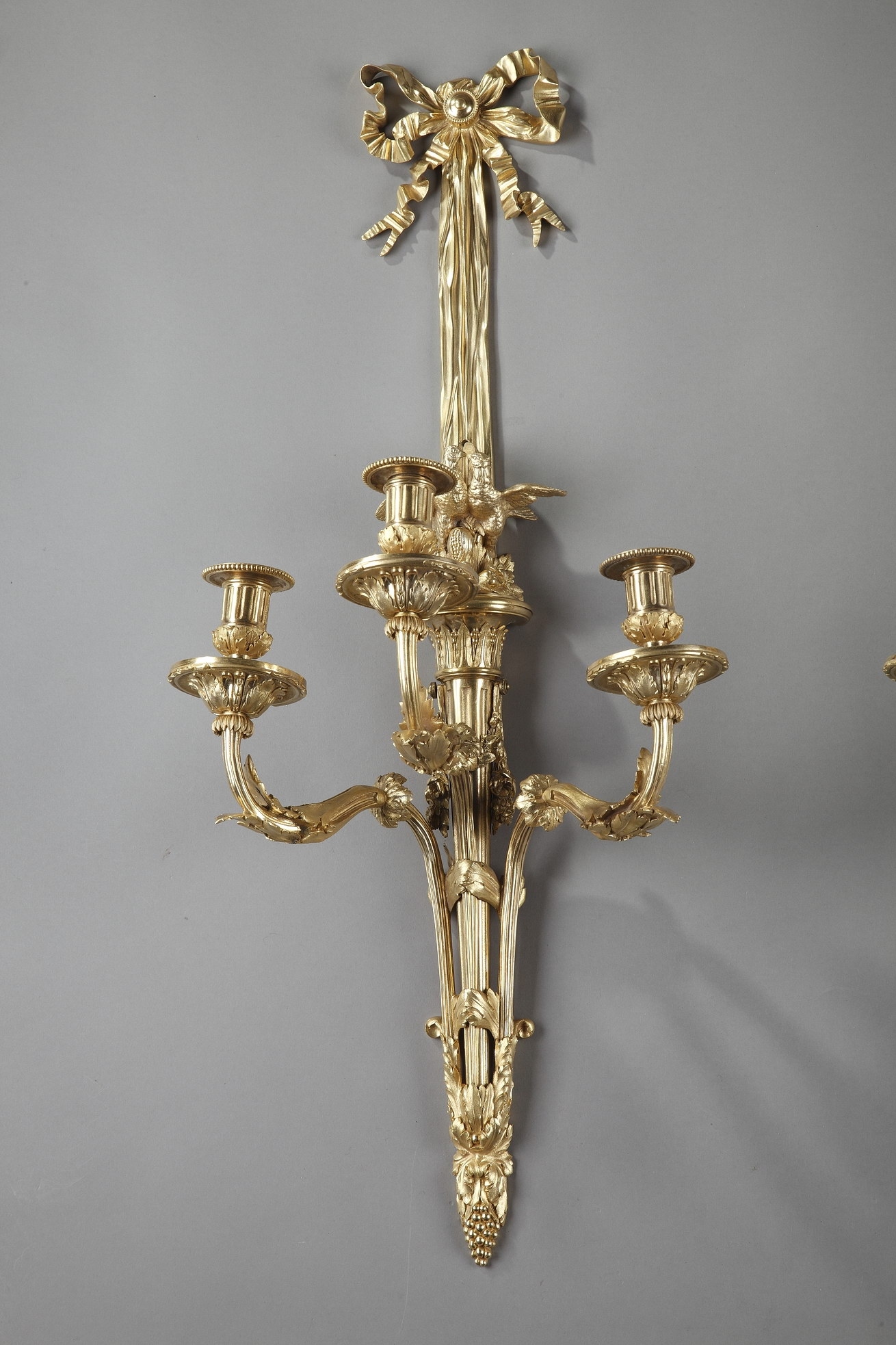
Large Louis XVI style wall sconces
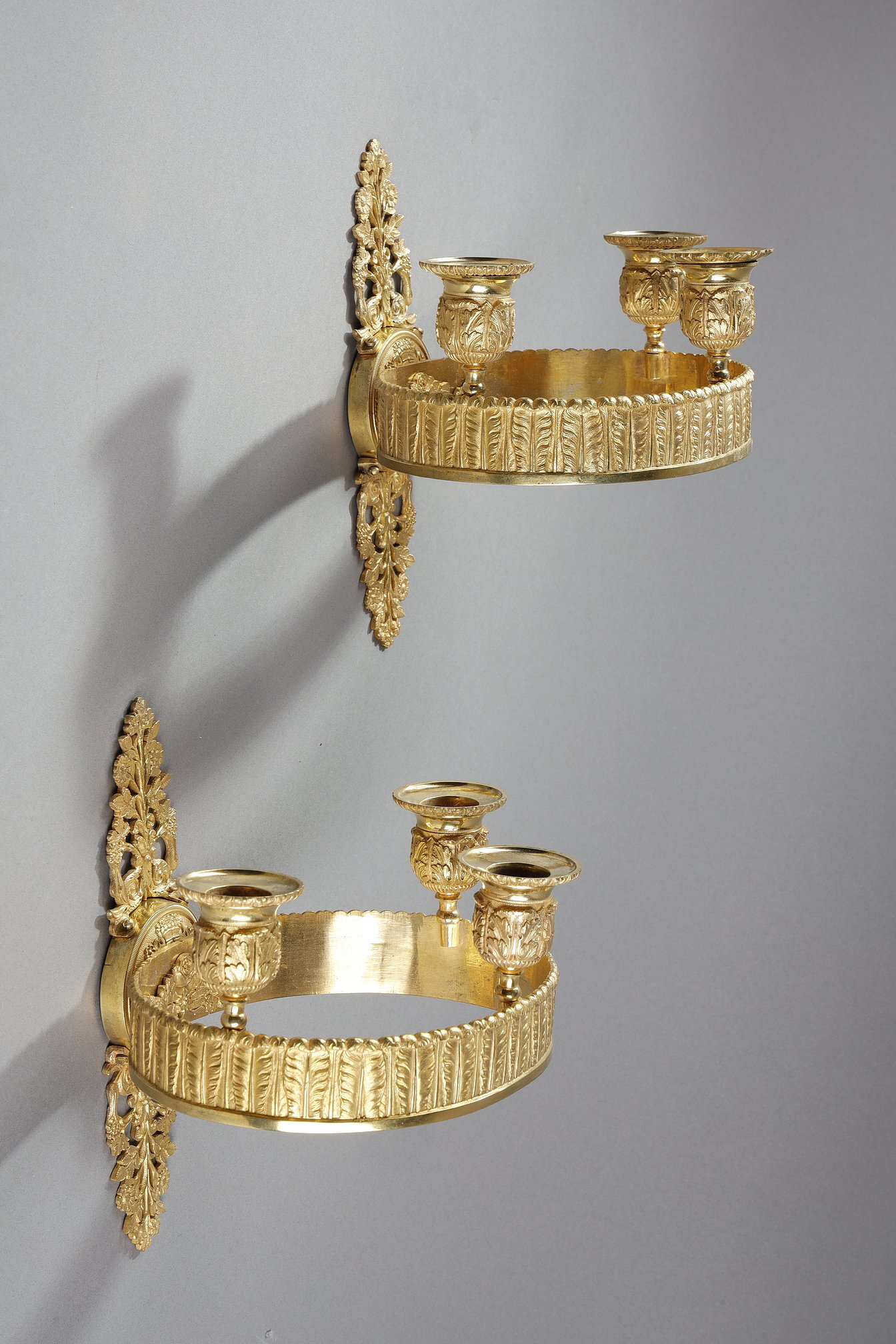
Pair of Restoration wall sconces
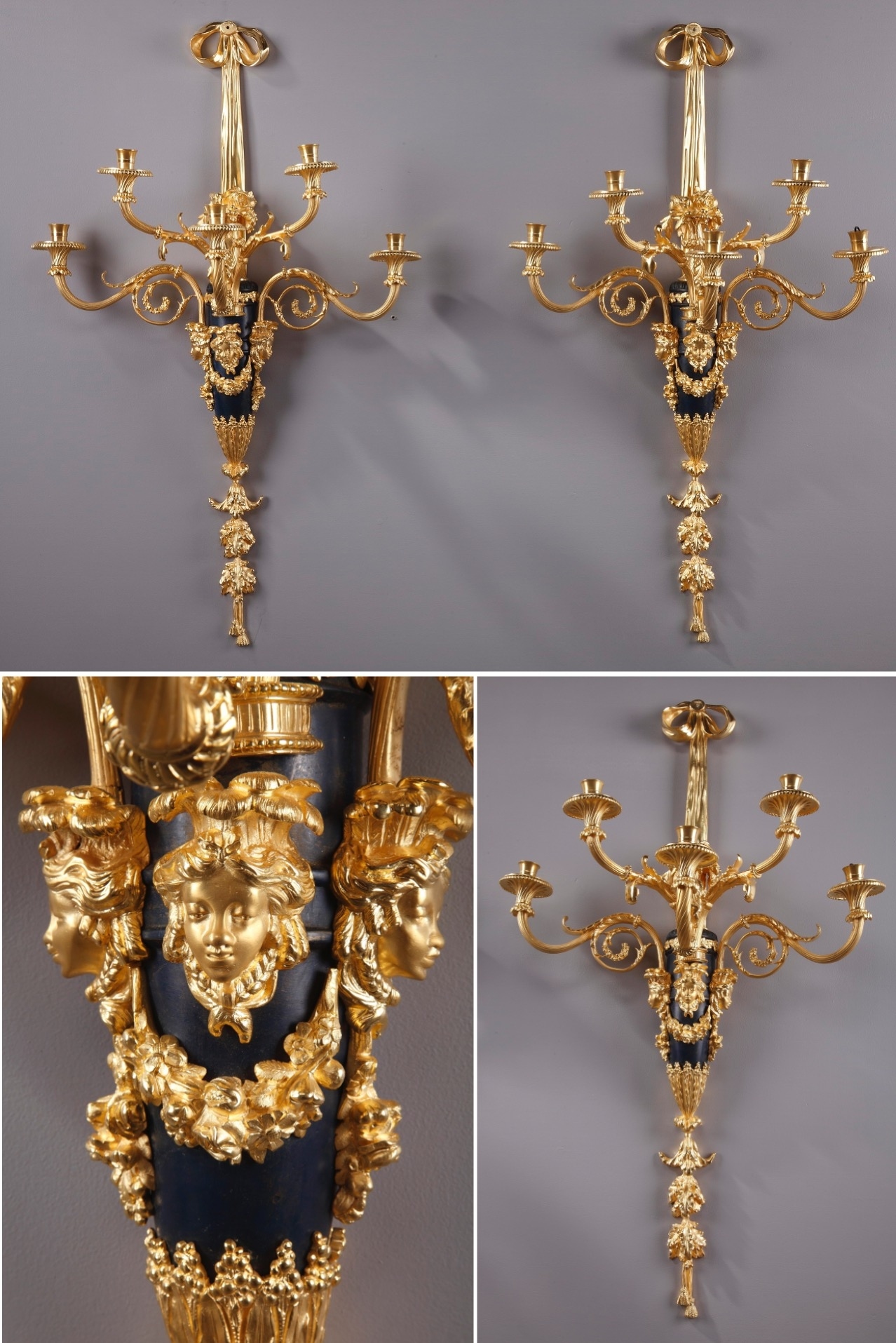
Pair of Louis XVI wall sconces after Thomire
Made of wood, bronze, or glass, wall sconces come in a wide variety of shapes: simple and symmetrical at the beginning of the century, they adopted the fanciful Louis XV style under Napoleon III. Galerie Atena has several examples of rocaille wall sconces in wood and gilt bronze, including a pair from the Louis XV period .


