Napoleon III tables and pedestal tables
28.03.21
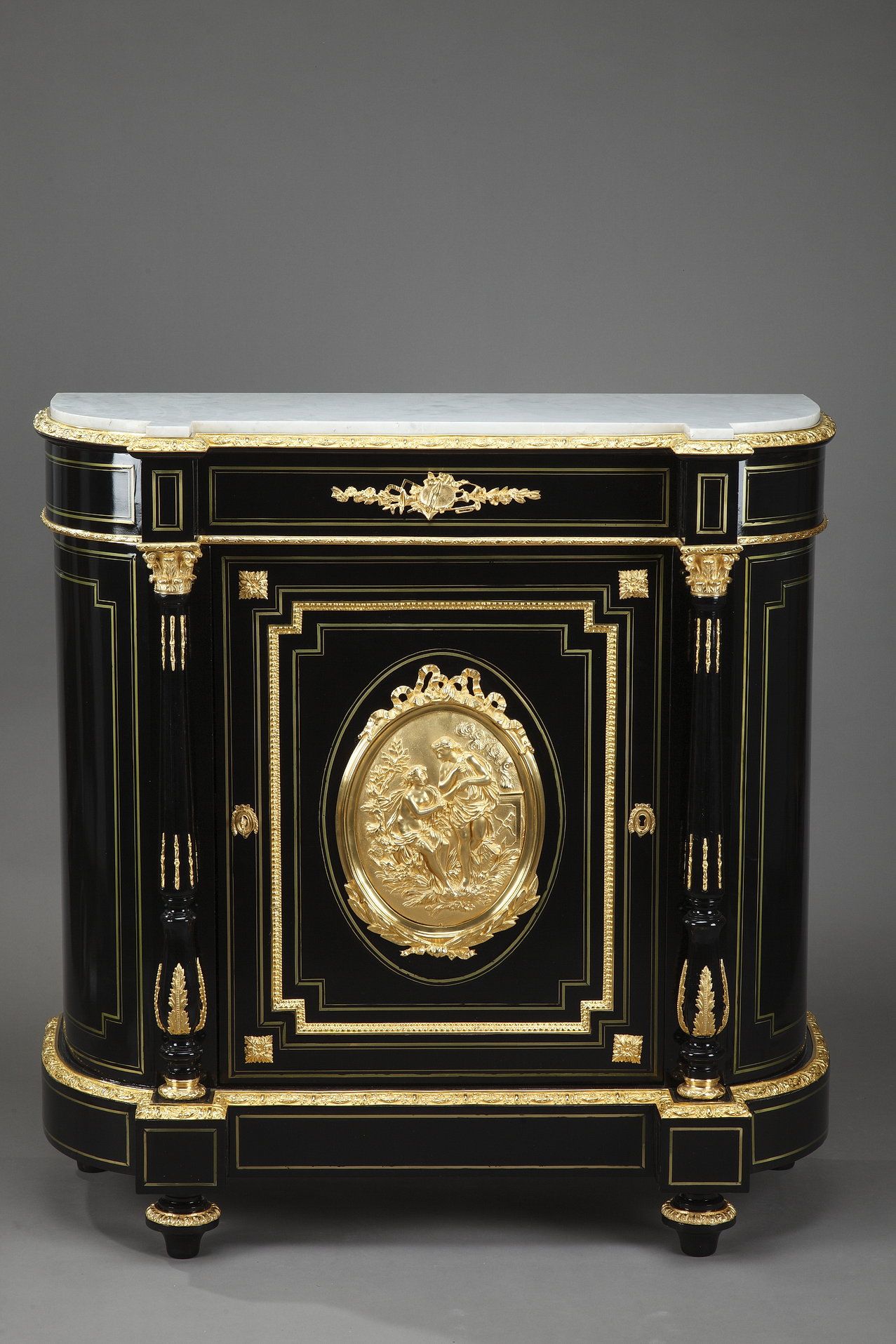
The Napoleon III style, which spanned from approximately 1852 to 1870, is characterized by a rich blend of 16th- to 18th-century styles. A large number of Boulle-style marquetry pieces, Louis XV and Louis XVI salons, and Renaissance and Empire- were produced. Small tables, such as pedestal tables and consoles, were particularly popular. Made of black lacquered wood, ebony, walnut, or rosewood, these tables served a variety of purposes, and their aesthetic owes much to earlier styles.
Dining room tables
Large dining room tables faithfully reproduce Louis XVI or Empire style tables, and more rarely, Renaissance style tables. The Louis XVI style, under the influence of Empress Eugénie, a great admirer of Marie Antoinette, perfectly imitates Louis XVI furniture, which is why this style is called "Louis XVI-Empress".
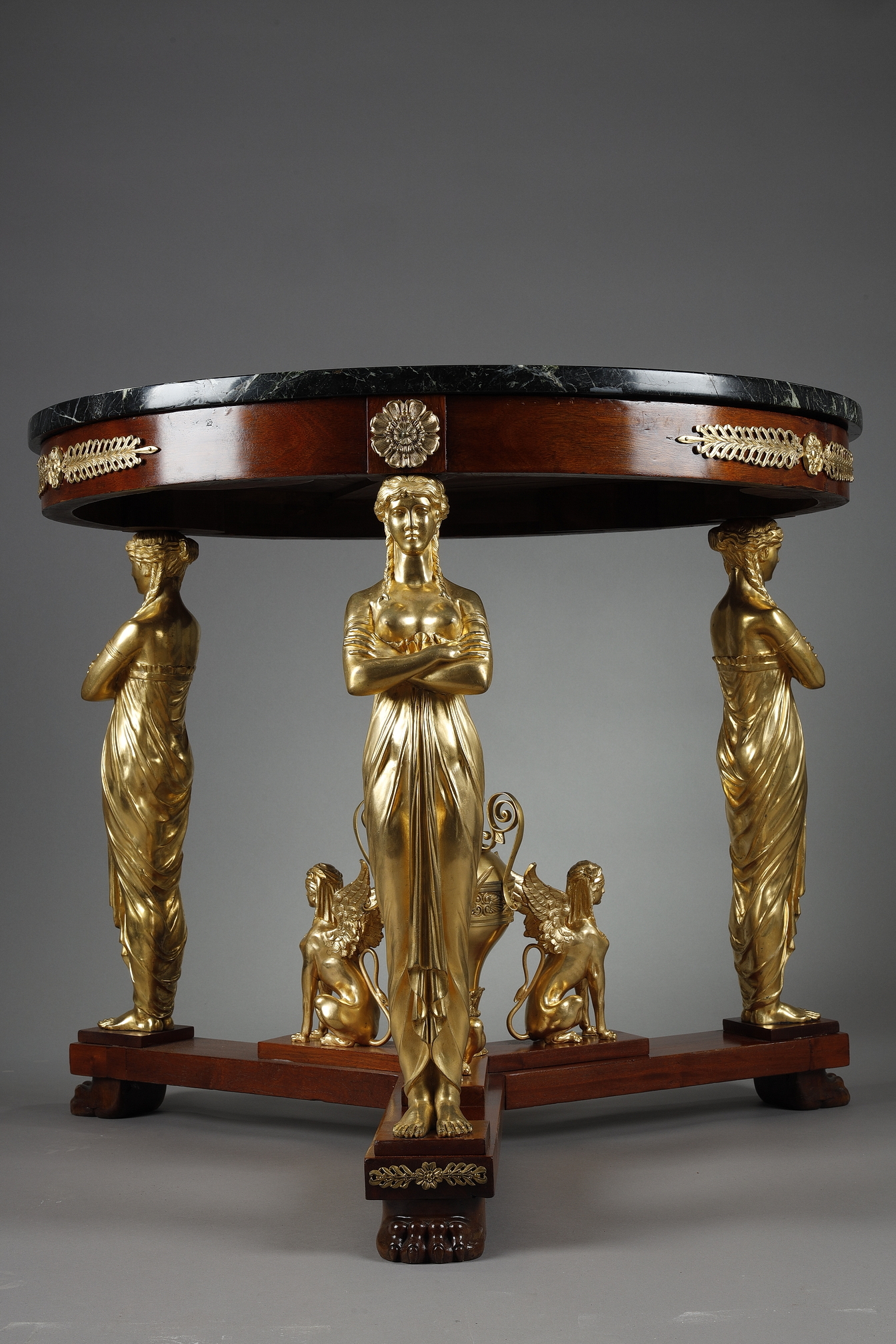
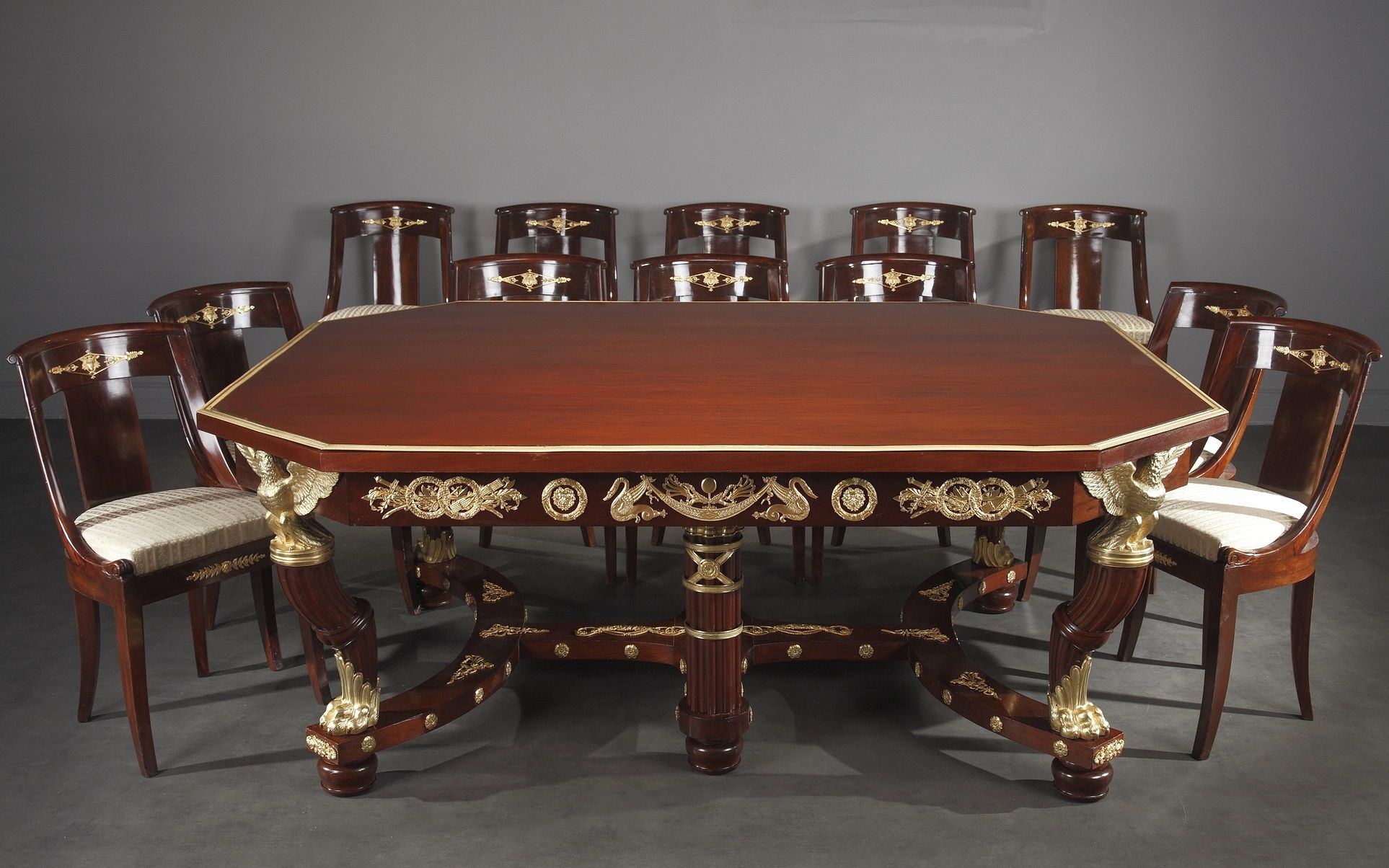 Empire style furniture set in mahogany and gilt bronze
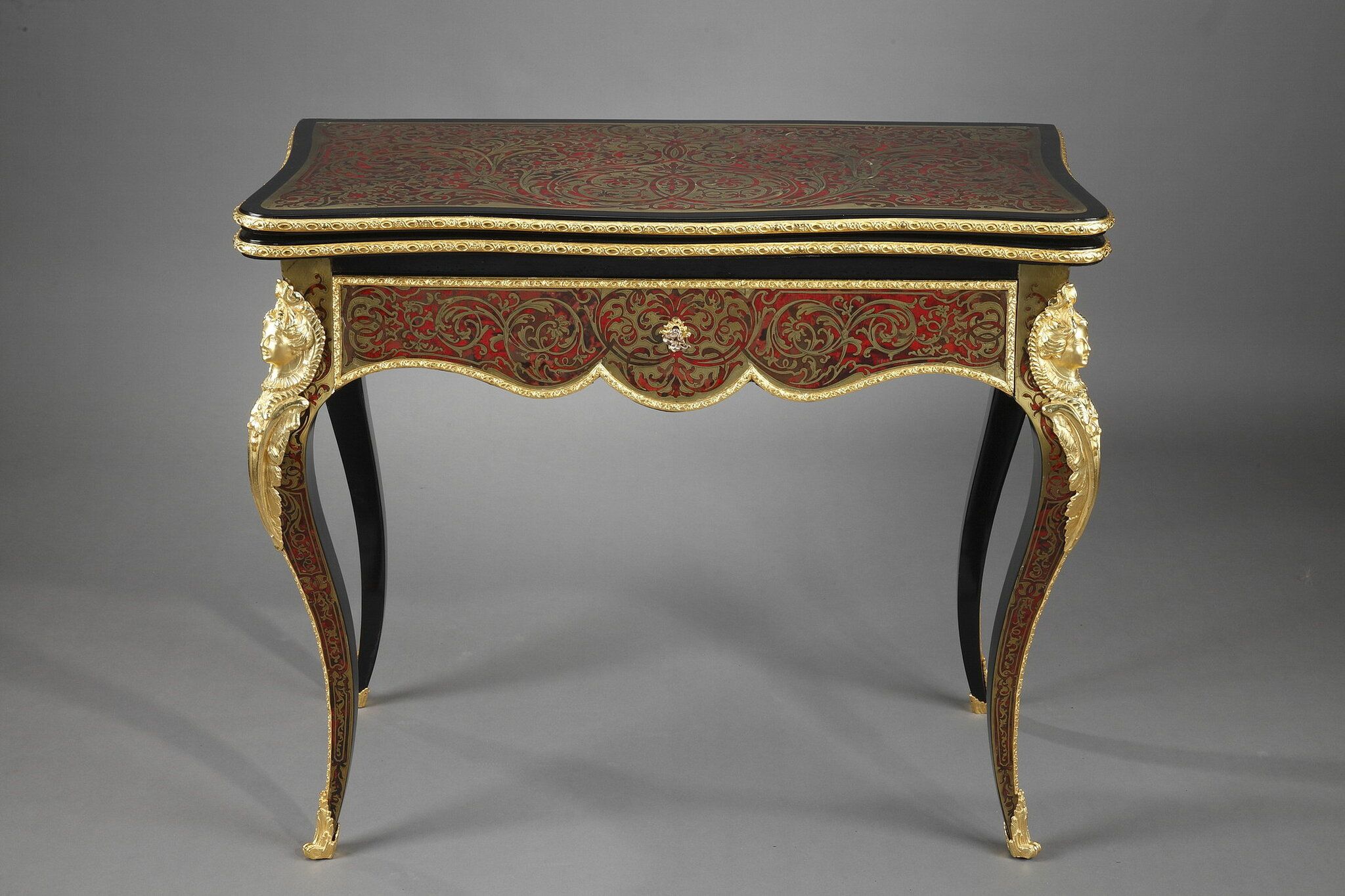 Boulle marquetry table
Our Empire style dining room incorporates the shapes and decorative motifs of the early century: gondola chairs, eagles, swans, diamonds, motifs typical of the Directoire and Empire .
Furniture in the style of André-Charles Boulle was produced in both small and large formats, and the craftsmanship is sometimes exceptional. Boulle marquetry is a superimposition of tortoiseshell and brass inlays, popularized by the renowned cabinetmaker to King Louis XIV. The principle of this marquetry is to saw a tortoiseshell plate and a brass plate, resulting in two backgrounds and two decorative elements to be veneered: a "first part" (tortoiseshell background with brass ornamentation) and a "counterpart" (brass background with tortoiseshell ornamentation). Several famous cabinetmakers during the reign of Napoleon III dedicated themselves to creating Boulle-style furniture, such as Joseph Cremer (1811-1878) and Charles-Guillaume Diehl (1811-1885) .
The Pedestal Tables
The Second Empire saw a clear preference for small tables with diverse uses: pedestal tables , consoles , nesting tables (invented during this period), worktables , and tilting tables . Most of these pieces were made of black lacquered wood and decorated with polychrome paintings (flowers, chinoiserie, or Renaissance scrolls). Some imitated older styles, particularly Renaissance and Louis XVI.
Many tilting side or pedestal tables are made of black lacquered wood or inlaid papier-mâché. Their round or rectangular top is hinged to a small column mounted on a finely carved tripod base. The whole piece is always richly decorated with inlays or polychrome paintings.
Black lacquered wood
Cabinetmakers during the Napoleon III era used dark woods such as ebony for furniture inspired by the Renaissance and Louis XV styles, or for imitations of the Boulle style. While almost all types of wood were used during this period, black lacquered wood enjoyed the most enduring popularity. It was particularly favored for small pieces of furniture with inlays or painted decoration. Black lacquered furniture painted with polychrome floral bouquets is representative of this period.