
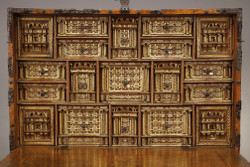
The Bargueño, a 17th-century Spanish cabinet
15.06.22
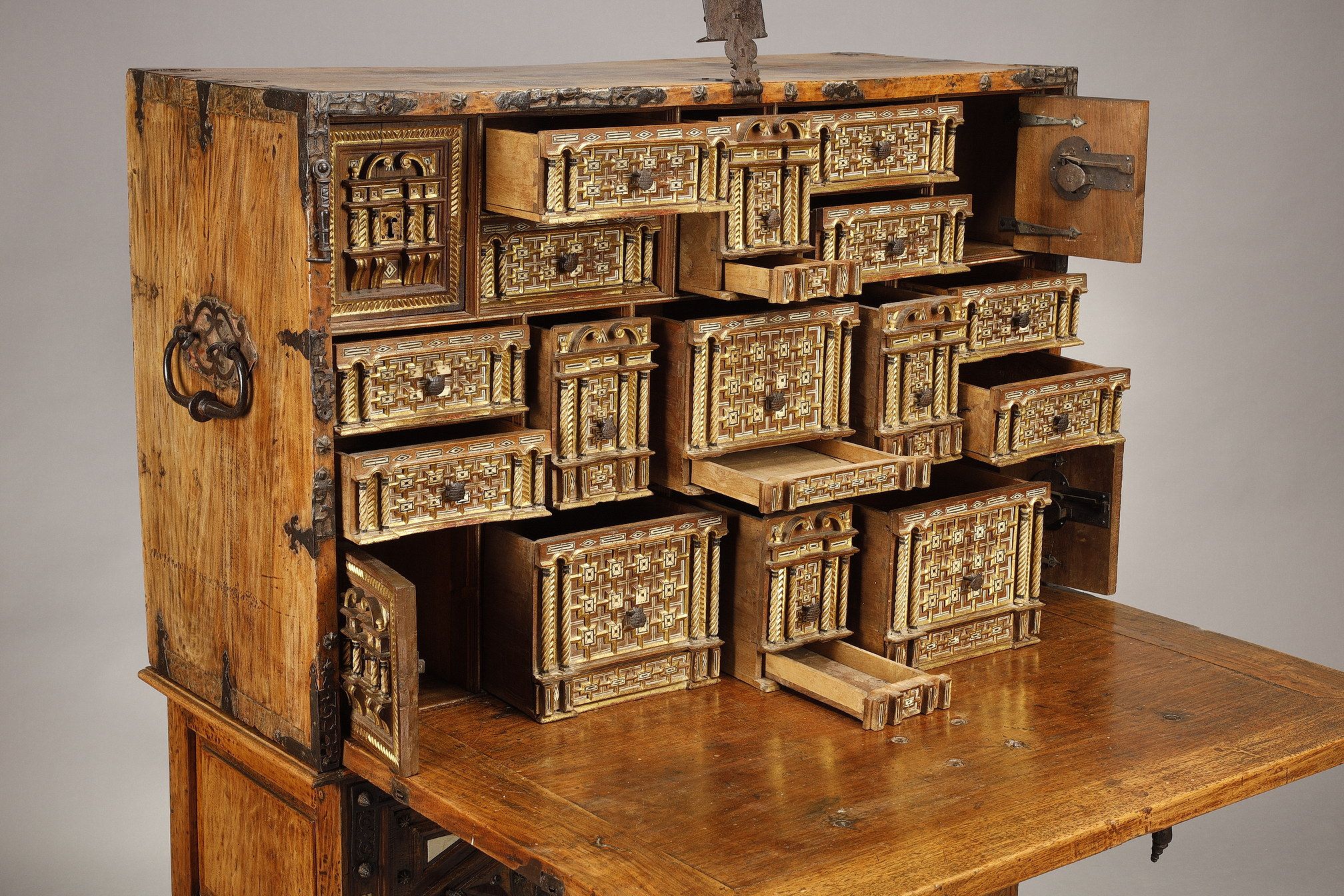
A Bargueño is a type of Spanish writing desk (" escritorio ") that appeared at the beginning of the 15th century. However, the term was coined in 1872 by Juan Facundo Riaño, a Spanish art historian. It refers to the small town of Bargas, near Toledo, which was the center of production for marquetry made in the 16th and 17th centuries. This piece of furniture consists of a chest , the Bargueño, usually placed on a base that can be an arched table (" pie de puente ") or a chest of drawers (" taquillon ") like the example in our collection. The chest opens with a lockable drop-front to reveal a multitude of drawers, several of which are secret.
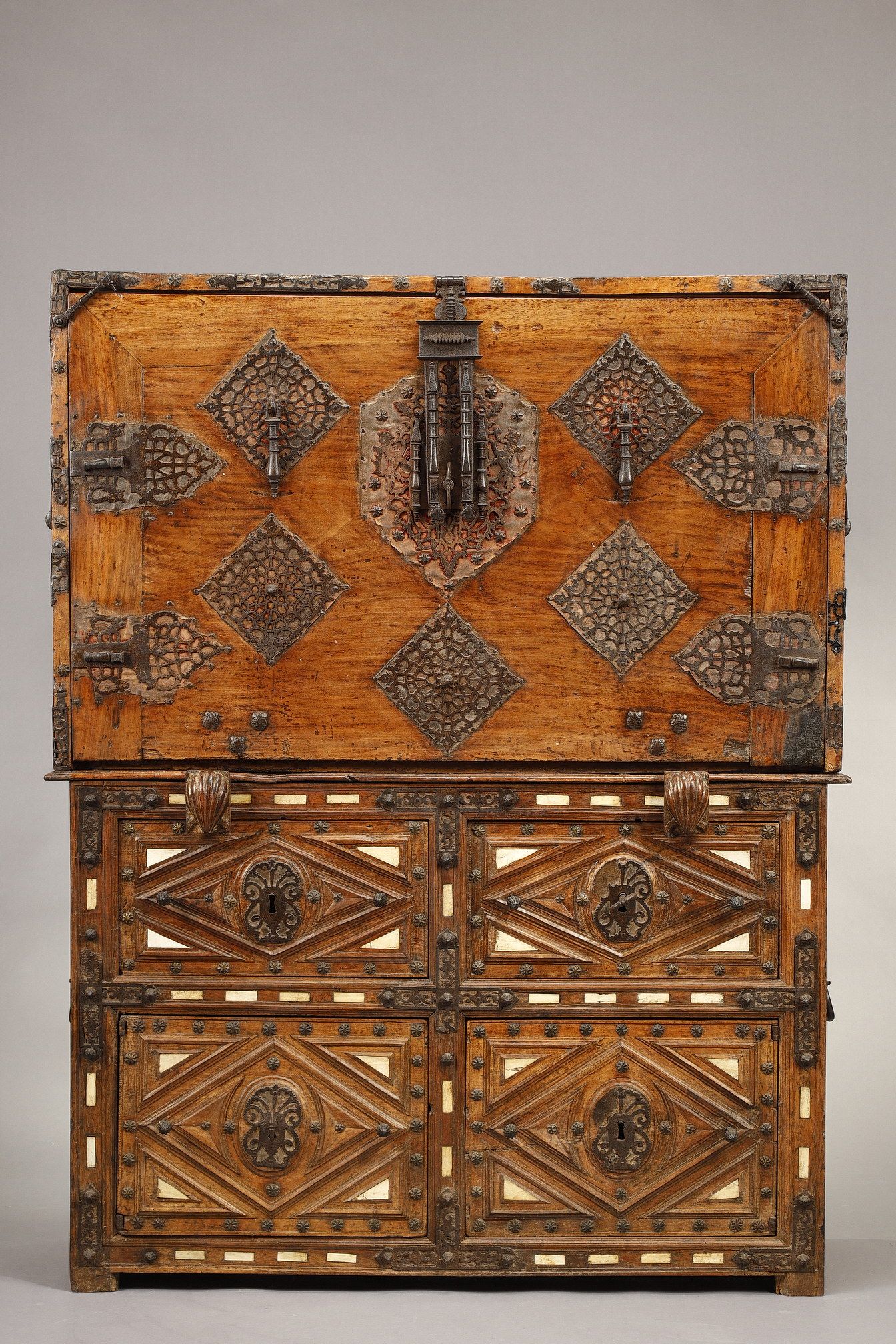
This cabinet , primarily utilitarian, features a very simple design with rigid, square lines. The oak, walnut, or chestnut wood panels emphasize the object's strength and imposing character. Its simple shape and side handles make it easily transportable. Until the mid-18th century, furniture followed its owners to their various residences. Furniture therefore had to be able to withstand long journeys. This characteristic allowed it to become the quintessential piece of furniture for conquistadors and missionaries exploring the "New World." Since it could hold administrative, diplomatic, and personal belongings, the Spanish made it an essential element of their voyages to the Americas.
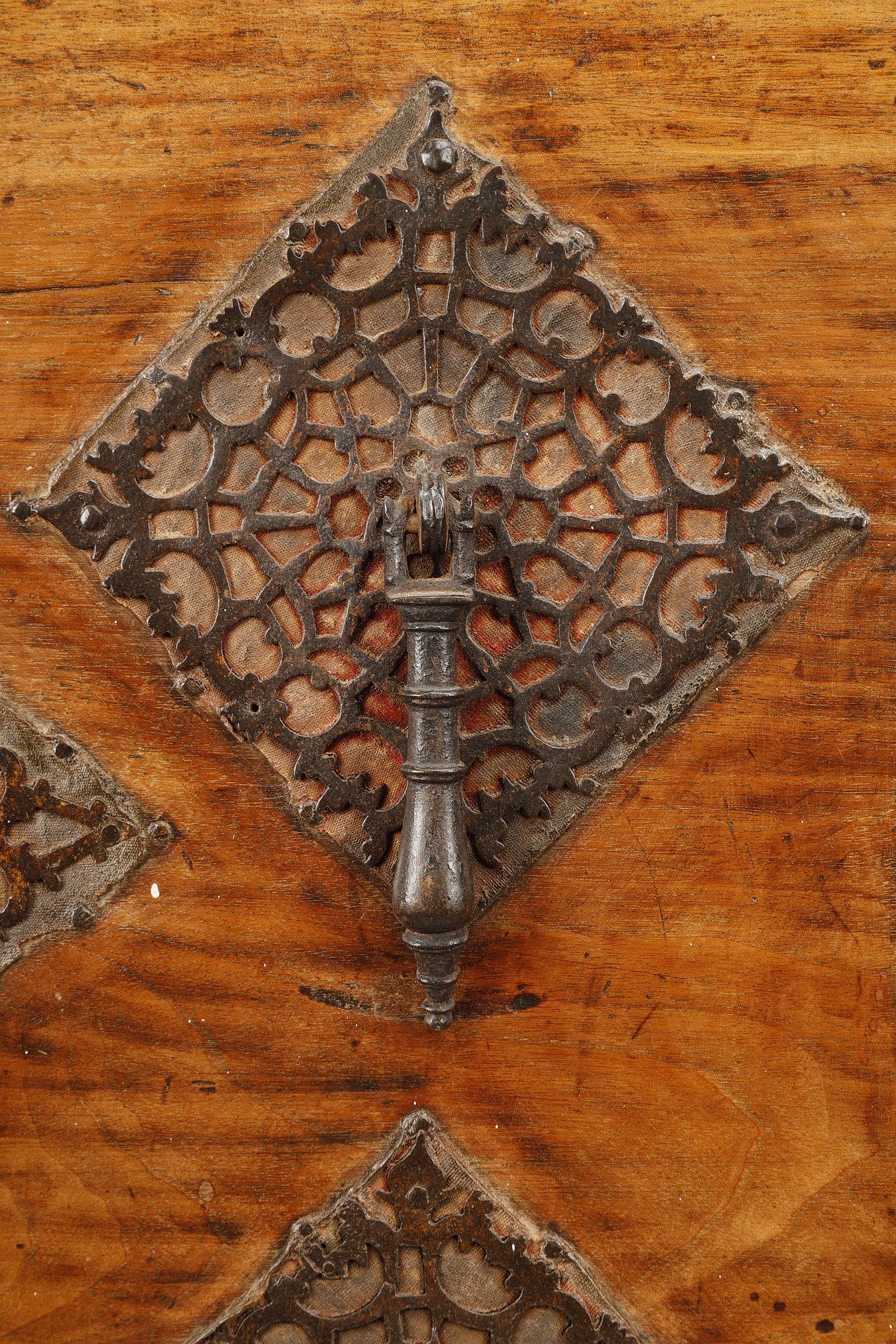
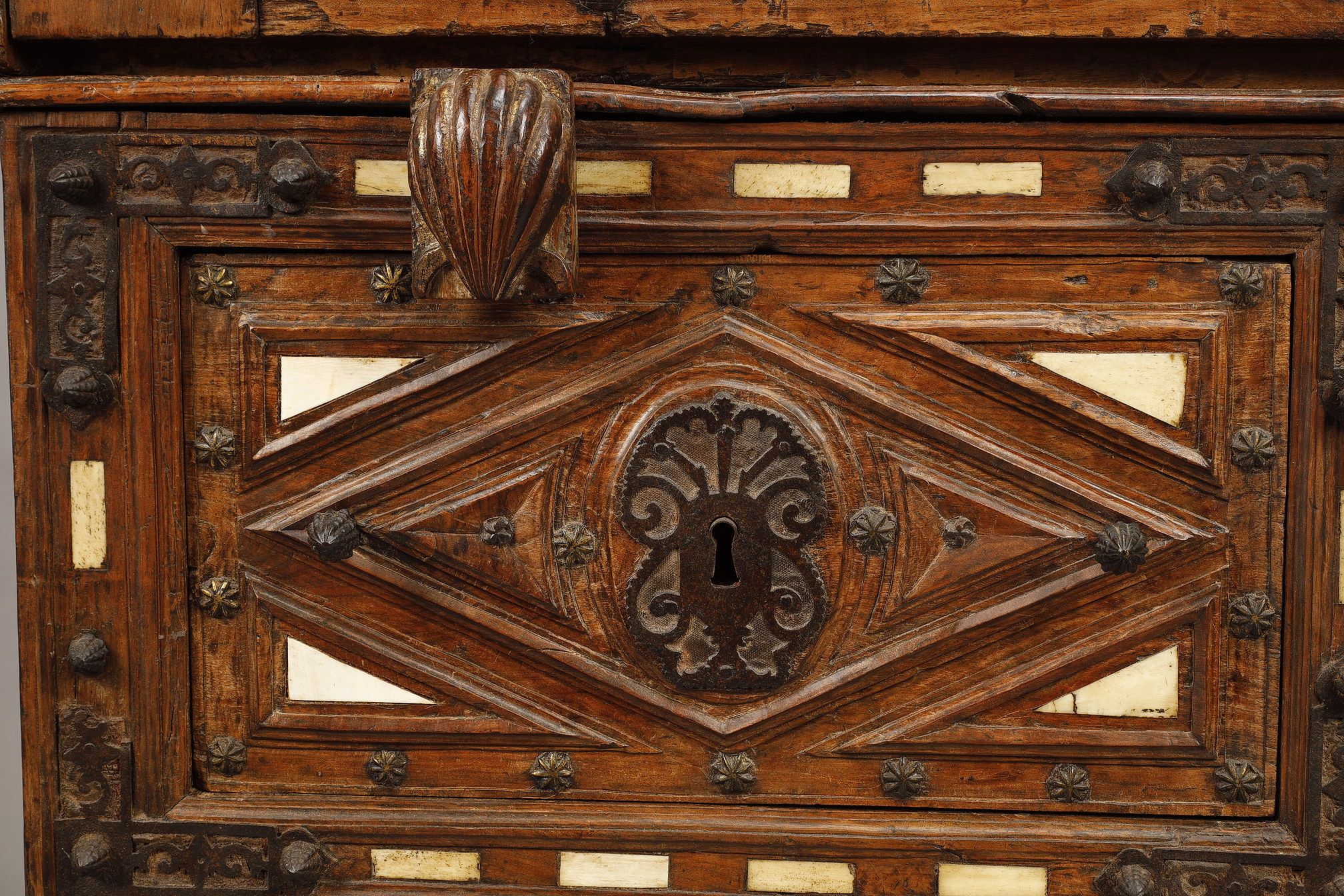
Adding to its massive appearance are heavy hinges and openwork wrought-iron latches inspired by Near Eastern craftsmanship. These reflect the Mudéjar style, influenced by the Islamic civilization present in Spain until the fall of Granada in 1492. These repetitive designs are inscribed within geometric forms. Sometimes, elements of velvet or red textiles are found, though these may have disappeared over time due to their fragility. These decorative elements are so prized that this ironwork can now be found on the art market sold separately. Some locks were even removed from their original pieces of furniture to satisfy the tastes of 19th-century collectors. Our Bargueño has retained its ornate double-hatch lock in the shape of towers and pomegranates, a representation of the wealthy Spanish homes that could have housed such a piece of furniture.
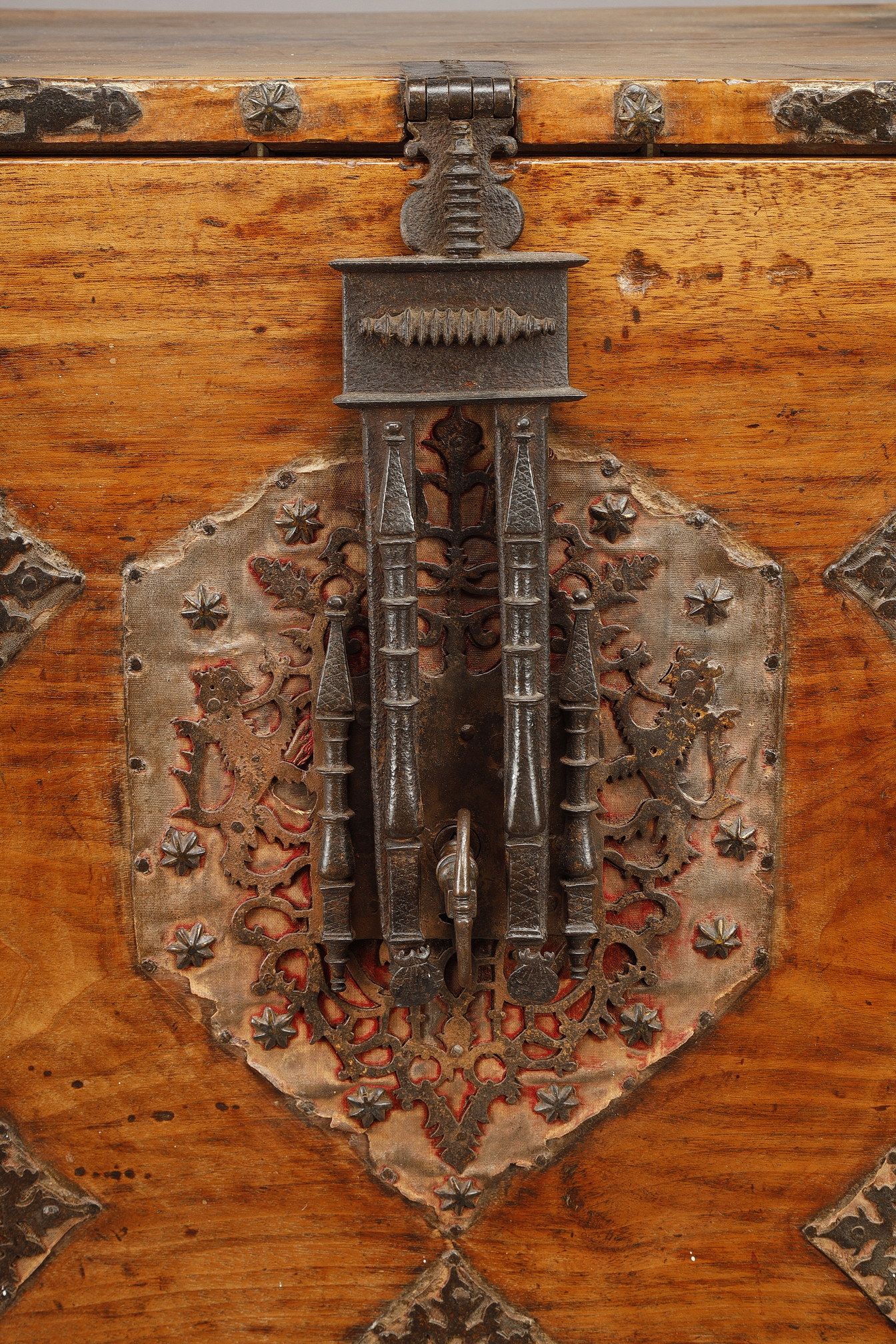
Originally a sacristy cabinet used to house religious objects (vestments, vases, or liturgical cups), the Bargueño retains traces of this use in the symbolism of its decoration. The shell-shaped drawer pulls are a reminder of the portable chests used by pilgrims on the Way of St. James, while the pomegranate symbolizes fertility, but above all, the resurrection of Christ. Although no longer strictly a religious piece of furniture, it retains a mystical dimension through its hidden compartments.
Reaching its greatest success during the Baroque period , it plays on the taste for drama, aiming to surprise the viewer. Indeed, behind a rustic facade lies a sophisticated, Italian-influenced interior, the work of architect Juan de Herera. Symmetrically arranged, the hidden drawers and compartments employ the architectural vocabulary of temples, with colonnades and arched pediments. An marquetry of wood and bone , showcasing the skill and techniques of the cabinetmakers. The owner can thus impress his audience by unveiling the various compartments, but also by displaying his collections of curiosities .
At the end of the 17th century, the Bargueño lost its function as a travel cabinet and became a prestigious piece of furniture found in all the grand Spanish homes. Faced with the Italian and German cabinets that then dominated the European market, it lost its drop-front and became a cabinet with the simple functions of decoration and storage for collections of precious objects.


