

Libraries and display cases, or the art of presenting collections
16.11.20
The bookcase as a storage unit
The bookcase is a piece of furniture designed for storing books that appeared in England at the end of the 16th century, a little over a century before France, where this type of furniture was found from the Regency period onward. It was made of wood resistant to wood-boring insects that could attack books: cedar, cypress, oak, mahogany, ebony, and cherry. Proportionate to the size of the room, the bookcase consisted of shelves and wire-mesh doors. Some, known as "low-profile" bookcases, were similar to other pieces of furniture at waist height.
Empire Libraries:
During the Empire period, bookcases were large and glazed in their upper section (up to two-thirds of the height of the piece). The lower section, slightly projecting, opened with two solid doors decorated with applied bronze mounts. Among the most common decorative motifs were the swan, the vine garland, the palmette, and oak and laurel branches tied with a thin, flowing ribbon.
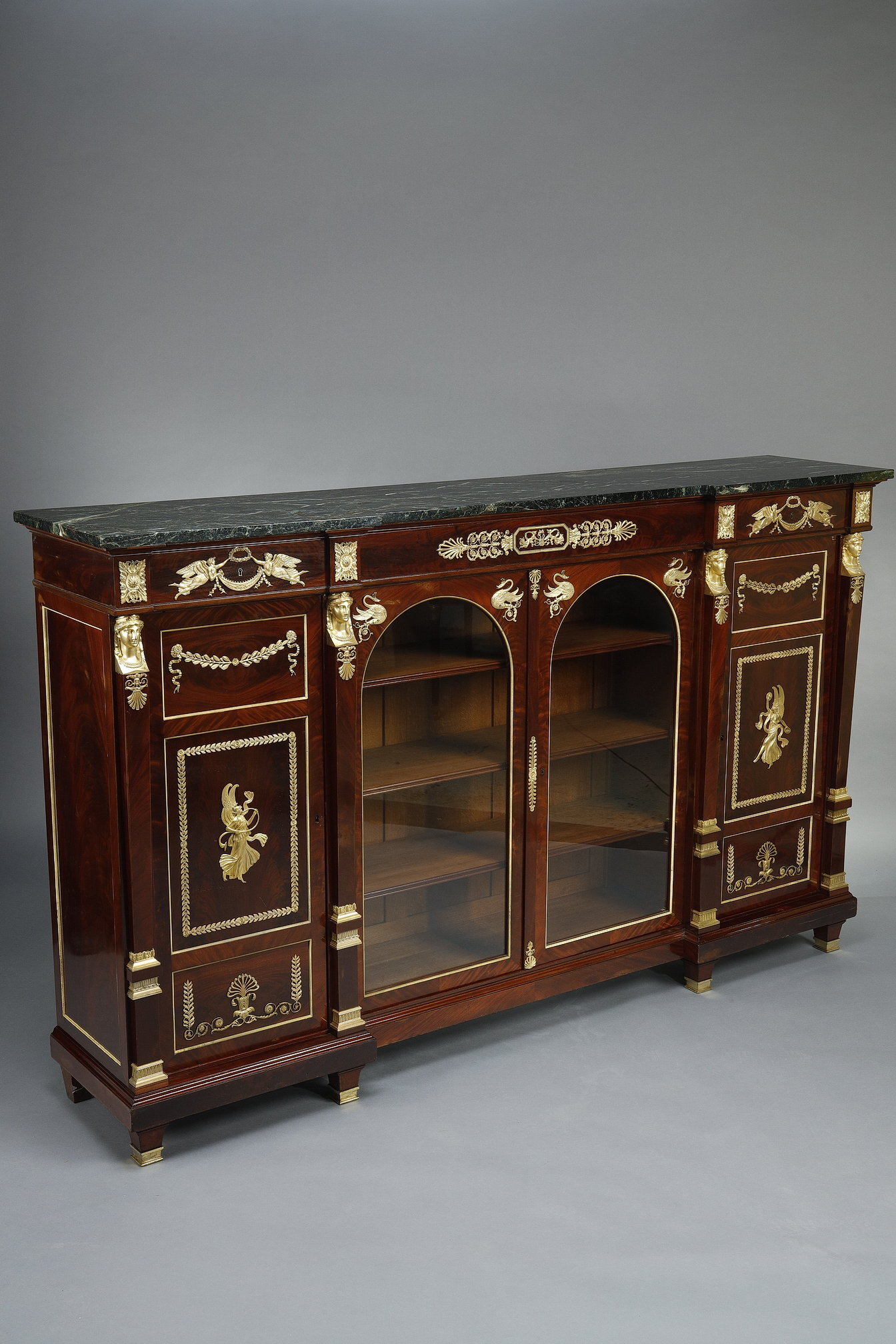
The cornice is straight, the forms are simple, the uprights are emphasized by flat pilasters or small columns decorated with bronze at the top and bottom. Although monumental libraries are the most common, there are also lower or waist-high libraries.
Restoration Libraries:
Restoration-era bookcases – made of mahogany, rosewood, or amaranth – are slender and uncluttered. The uprights, in the form of flat pilasters, are surmounted by a straight cornice of low relief.
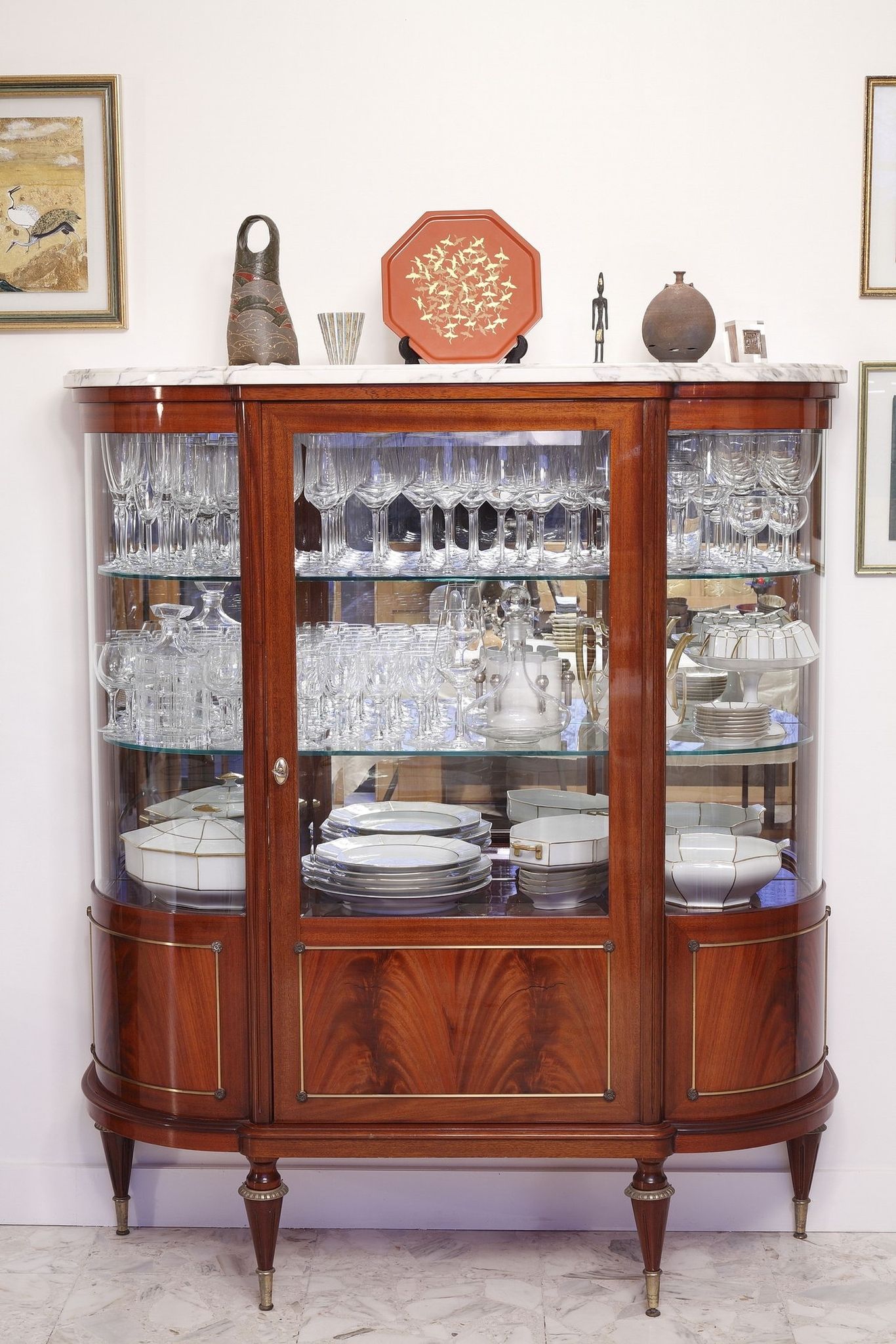 Louis XVI style display cabinet in mahogany veneer with a marble top
The two or three doors are glazed for two-thirds of their height, revealing the shelves. The lower third, with wooden doors, features inlaid motifs or dark lines forming small panels. Theinlay work , crafted by artisans of that era, is of exceptional quality and finesse—true works of art.
The Napoleon III Libraries
Although it has changed relatively little since the Louis-Philippe style—where structures and forms became heavier—the bookcase remains a typical piece of furniture from the Napoleon III era. Gothic models (also known as "cathedral-style") are still very popular. bookcases in black lacquered wood : the lower section is closed, while the upper section has two or three glass doors, sometimes with grilles.
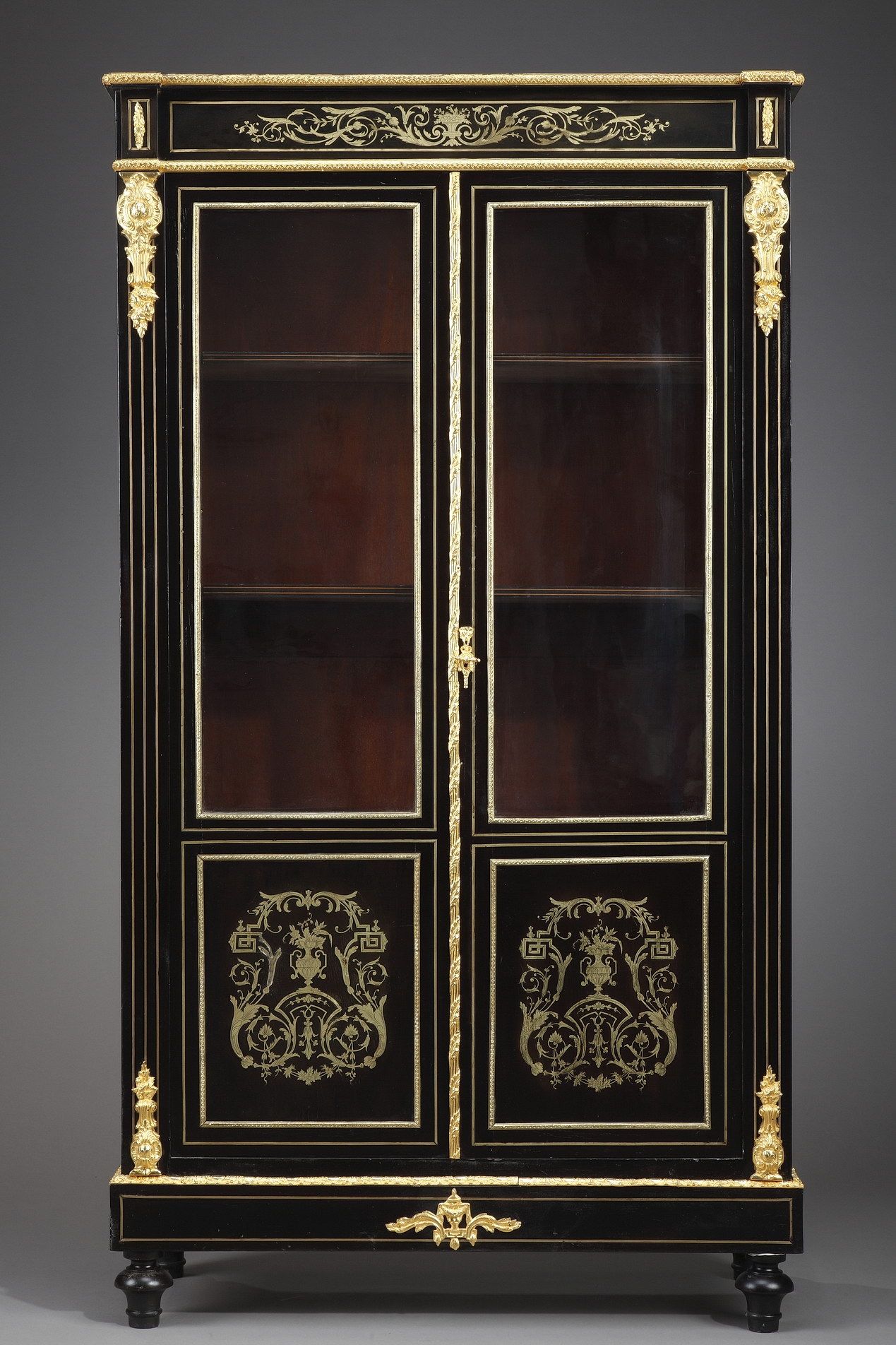 Napoleon III style Bérain display cabinet in blackened wood
Like side tables, bookcases are richly decorated with marquetry in the Boulle or Louis XVI style. Curved, marquetry-inlaid Louis XV models are also fashionable. Their ornamentation consists of gilt bronze mounts and floral marquetry motifs.
Display cabinets
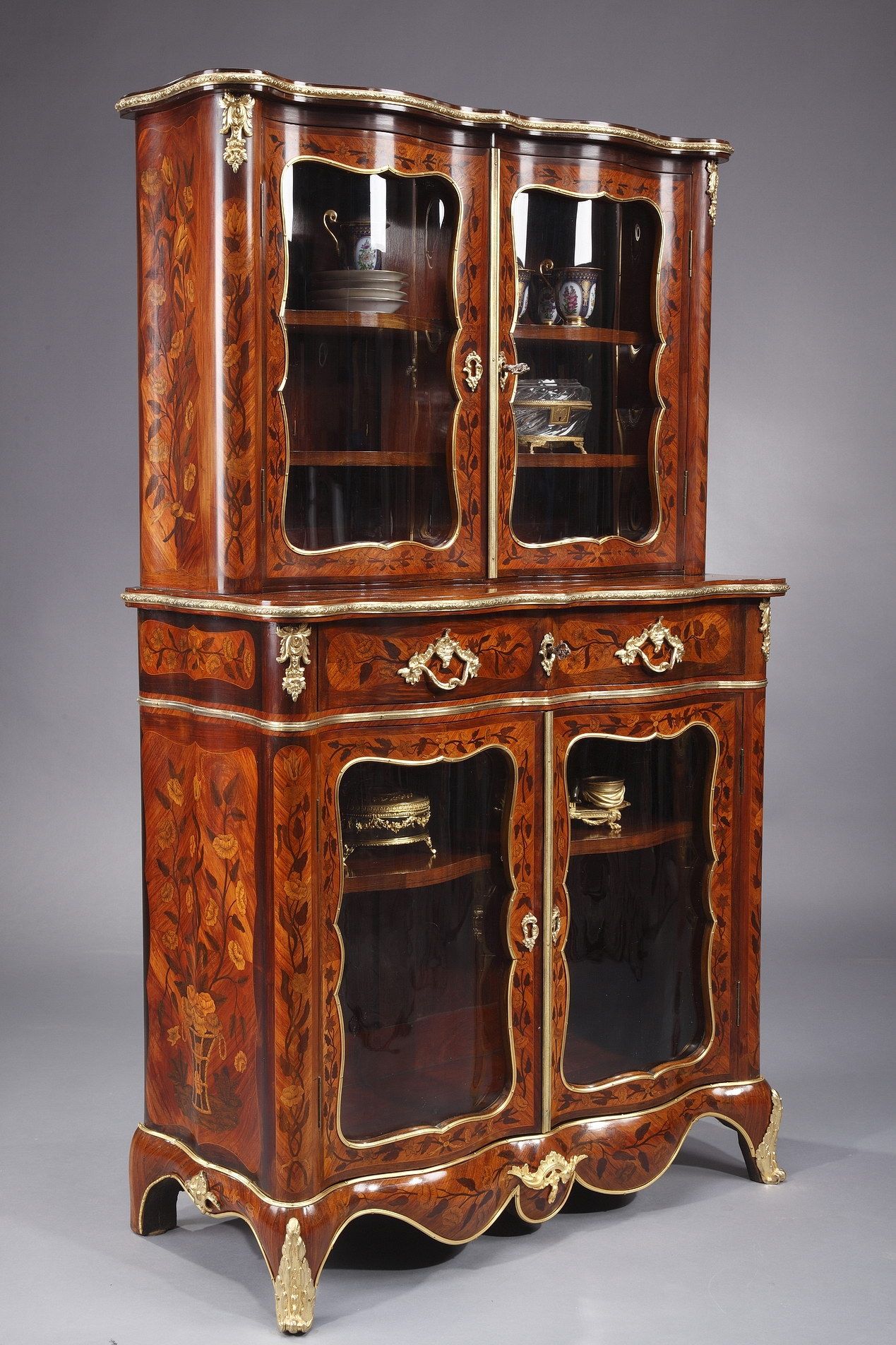
Louis XV style display cabinet with marquetry decoration
A display cabinet is a piece of furniture designed to allow the contents to be seen through a glazed front and/or sides. It typically consists of shelves holding trinkets and collectibles. It first appeared during the reign of Louis XVI in the form of a small, very simple cabinet with glazed doors. The ornamentation is discreet, precisely to allow the objects to shine. The feet of Louis XVI display cabinets are either toupie (spindle-shaped) or fluted and end in a sabot (a small, pointed foot). The slender, elegant uprights, with chamfered corners or fluted columns, reflect the fashionable ornamentation of the time.
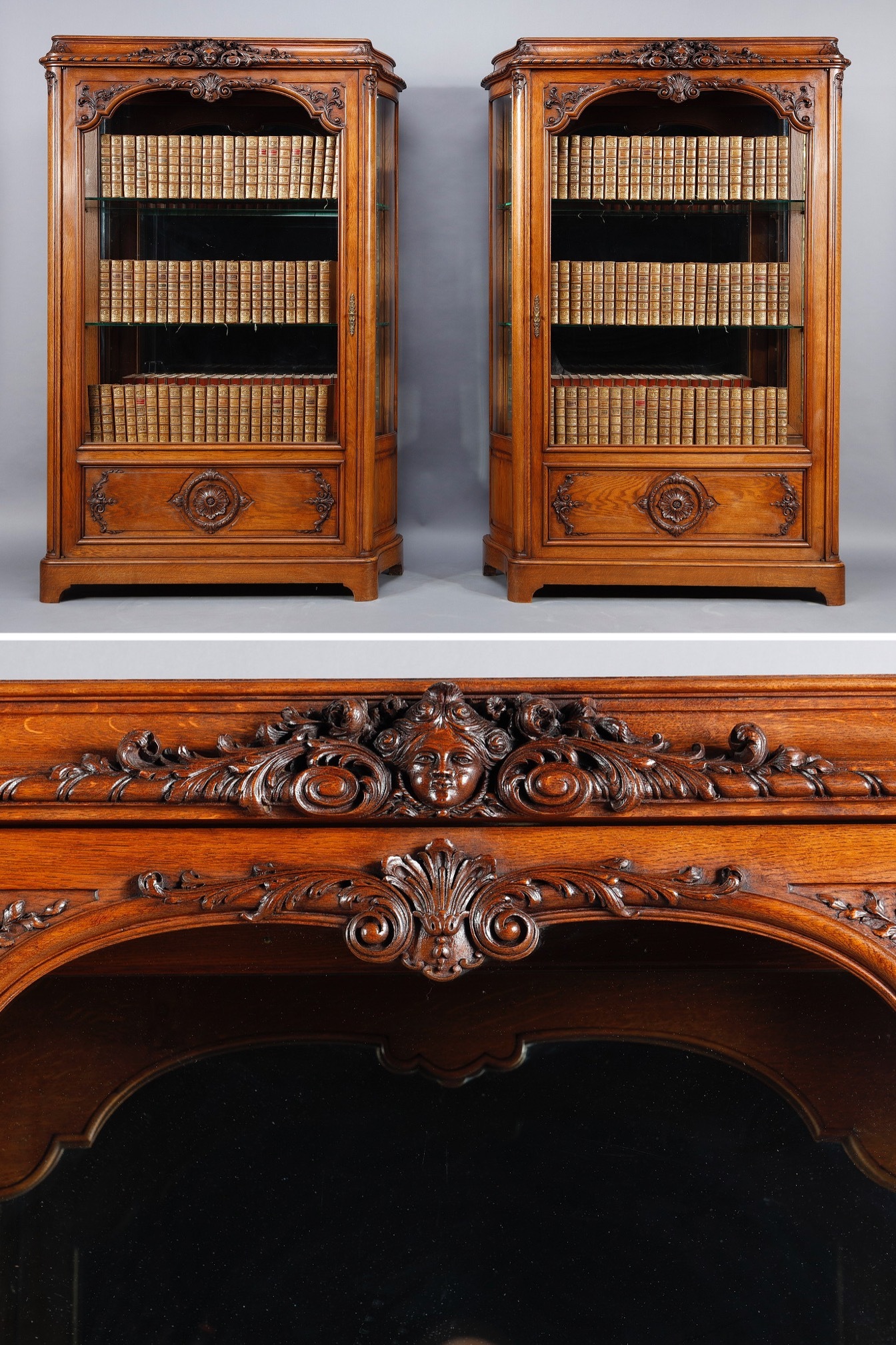
Pair of Regency Style silver cabinets
The success of this decorative piece of furniture led cabinetmakers to produce smaller models that could be placed on chests of drawers, or that were fitted with a base, thus becoming standalone pieces of furniture: veritable display tables. These could be glazed on all sides or have only the top glazed. Later, display cases became larger, with metal frames and all four sides entirely glazed.


