
The console: History and specific features
06.07.20
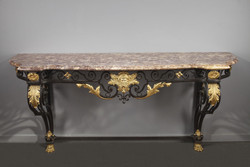
A console table is a tall, slender piece of furniture resembling a half-table placed against a wall. Its original four legs are often reduced to two, and sometimes a single pedestal supports an ornate display. The console table is more of a decorative piece than a functional one. Positioned along walls or in corners, console tables are designed to display works of art and sculptures.
The wall-mounted console table during the Regency period
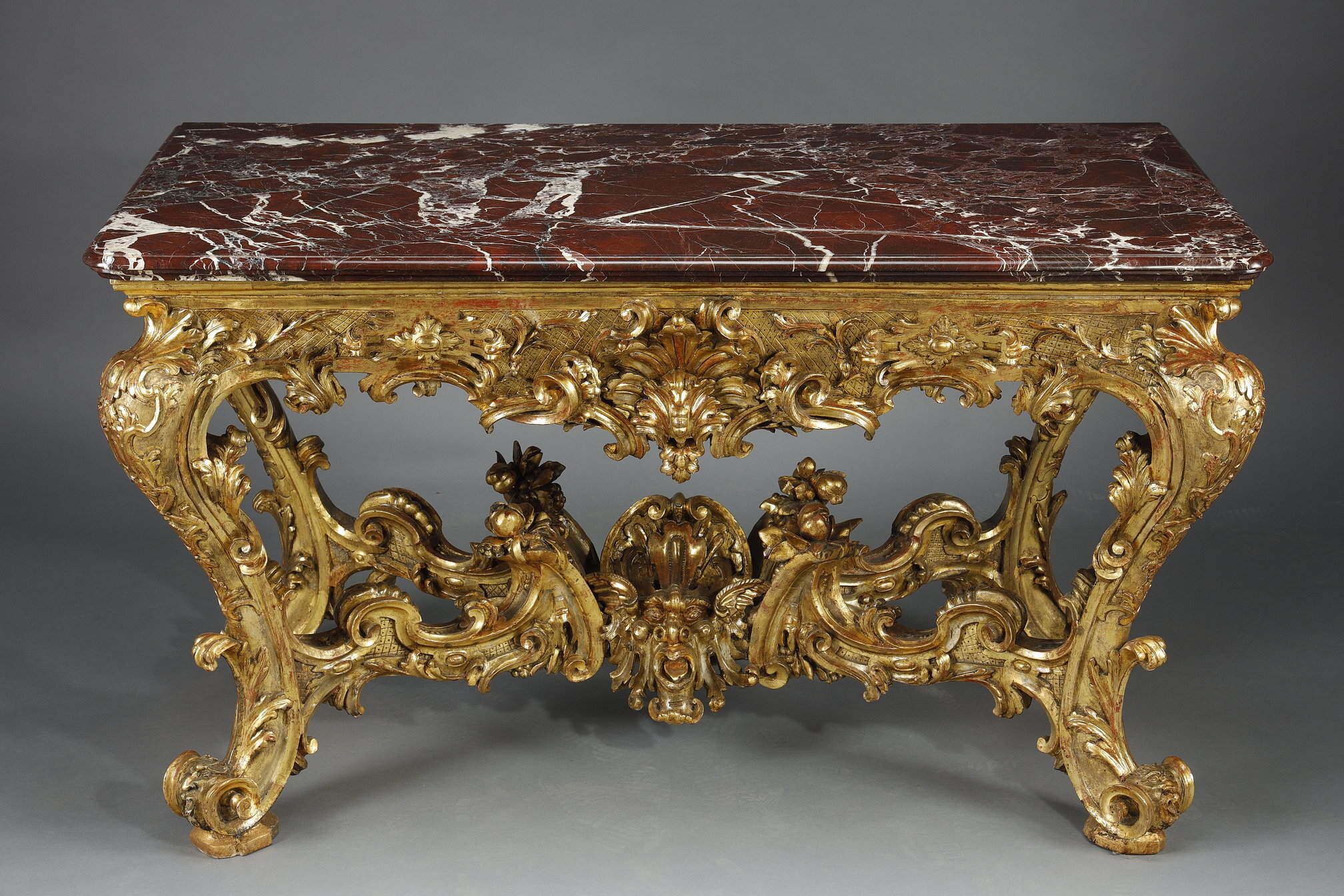
Very common in interiors from the 17th century onwards, the console table features a wide, highly ornamented, and sometimes openwork carved apron. It is made of waxed, painted, or gilded oak or beechwood . During the Regency period, wall-mounted consoles were generally set into wainscoting. Carved decoration became abundant, preceding the excesses of the early Louis XV style . The S-shaped base is highly ornamental. The two or four feet have finials in the form of espagnolettes or bearded mascarons . The stretcher is also very elaborate, featuring a prominent decorative motif in its center.
Louis XV consoles
Primarily a decorative piece of furniture placed in the entrance hall of apartments or between two windows, the "console table"—as it was called during the reign of Louis XV—lends itself admirably to the whims of the Rococo style. The marble top is supported by two scrolled legs and leans against the wall.
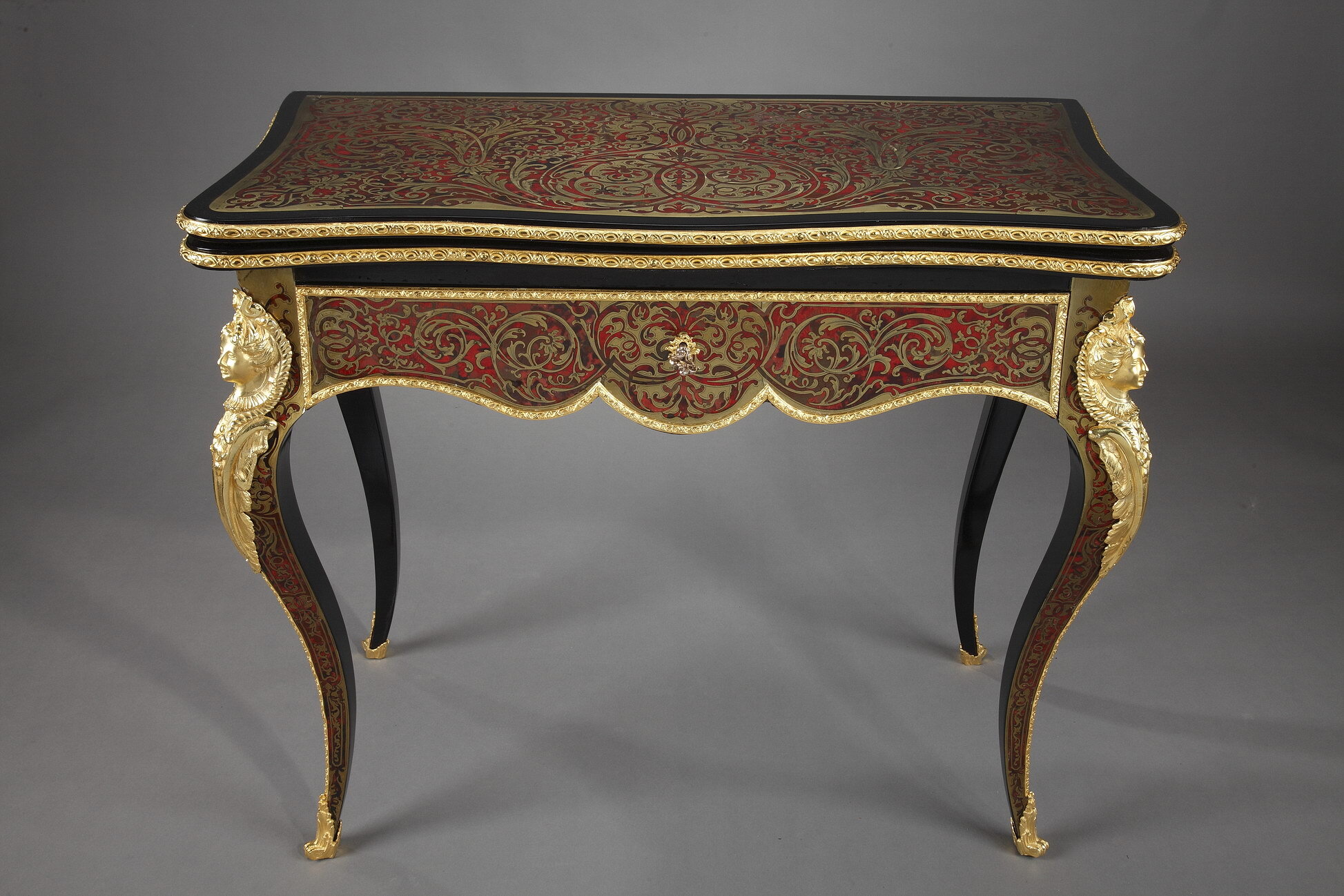
Adorned with jagged foliage, the consoles are made of natural oak or, more often, gilded . The consoles can also be painted to match the woodwork or "au naturel," meaning the roses are pink, the leaves green, and the daisies white. The sinuous legs are richly carved with shells, acanthus leaves, scrolls, and a profusion of openwork plant motifs. The outer edge of the marble top, initially carved with a corbel-like beak, later features a double groove, before the right-angled cut that became widespread during the Empire period.
Louis XVI console tables
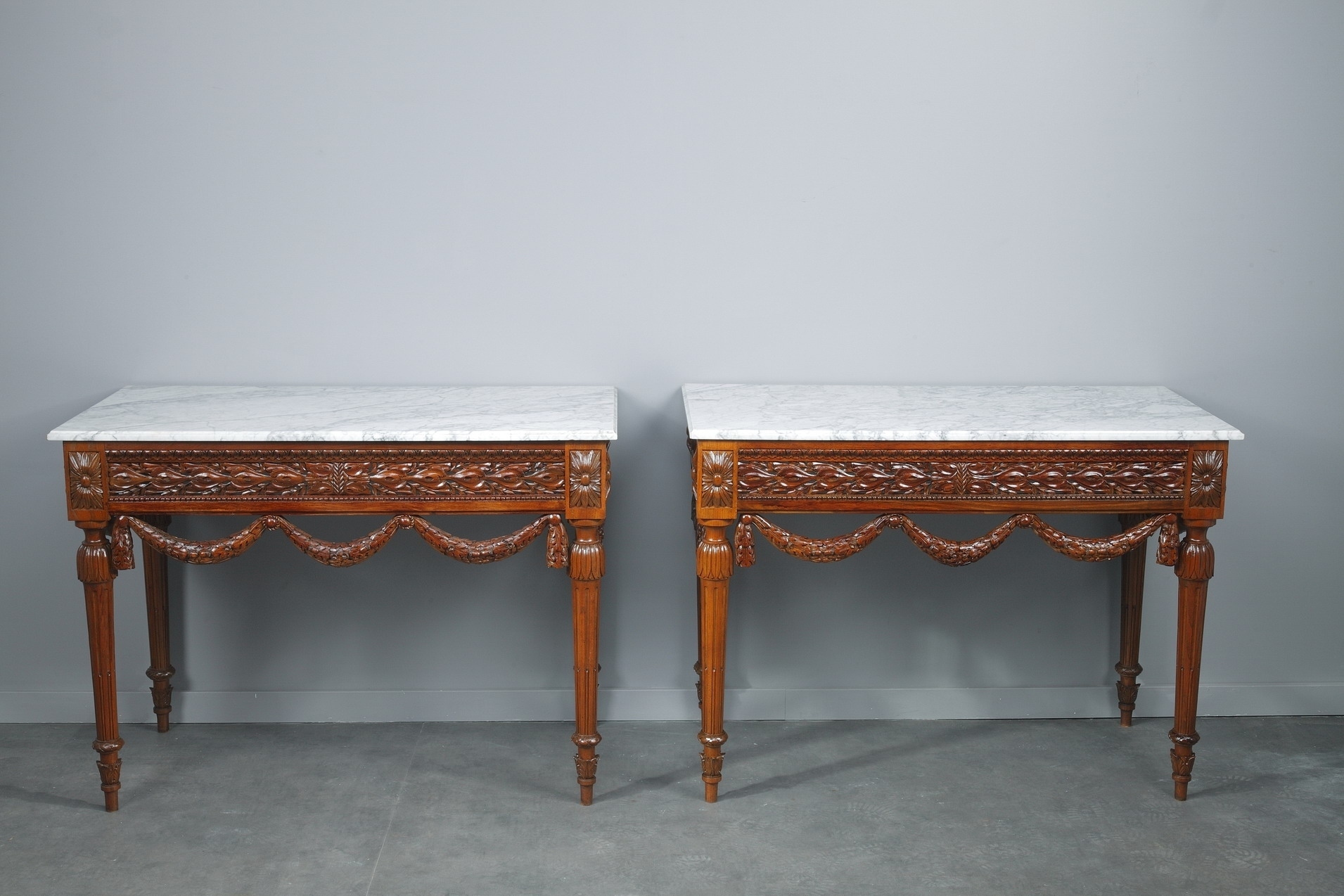
Louis XVI consoles are very different from Louis XV consoles. The cabriole legs are replaced by straight fluted legs, reeded or not, connected to each other by a curved stretcher supporting an antique urn or a vase with rectangular handles.
The rectangular or semi-circular marble top fits snugly against the decorated band, which features interlacing rosettes or fluting. Garlands of roses and sculpted, draped bows adorn the frieze.
Directoire and Empire style consoles
During the Directory period, rectangular console tables abandoned their half-moon shape. Both their materials and ornamentation were very simple. The tables featured a marble top supported by tapered legs, sometimes adorned with caryatids , chimeras , swans , griffins , and sphinxes, which would become standard during the Empire period.
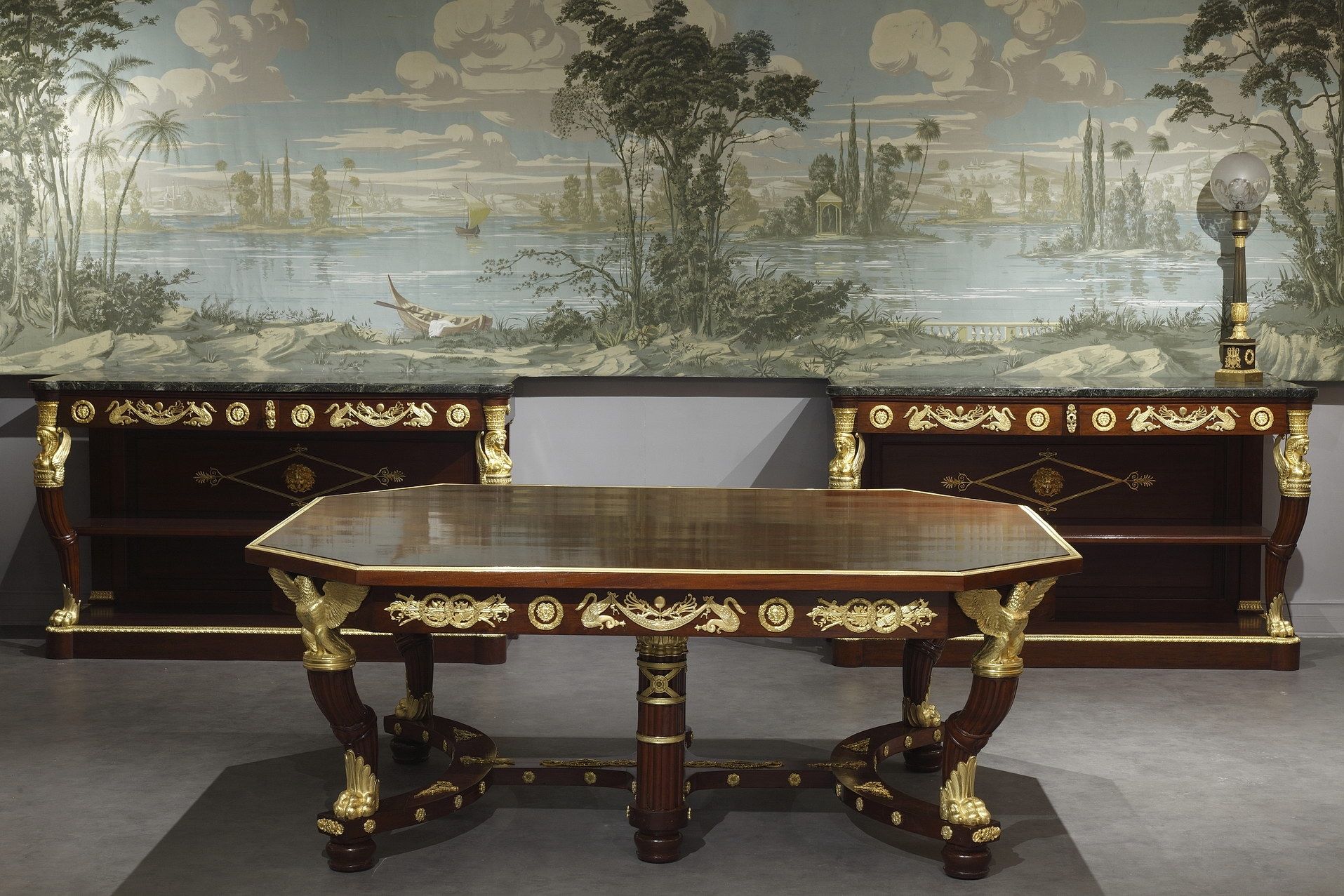
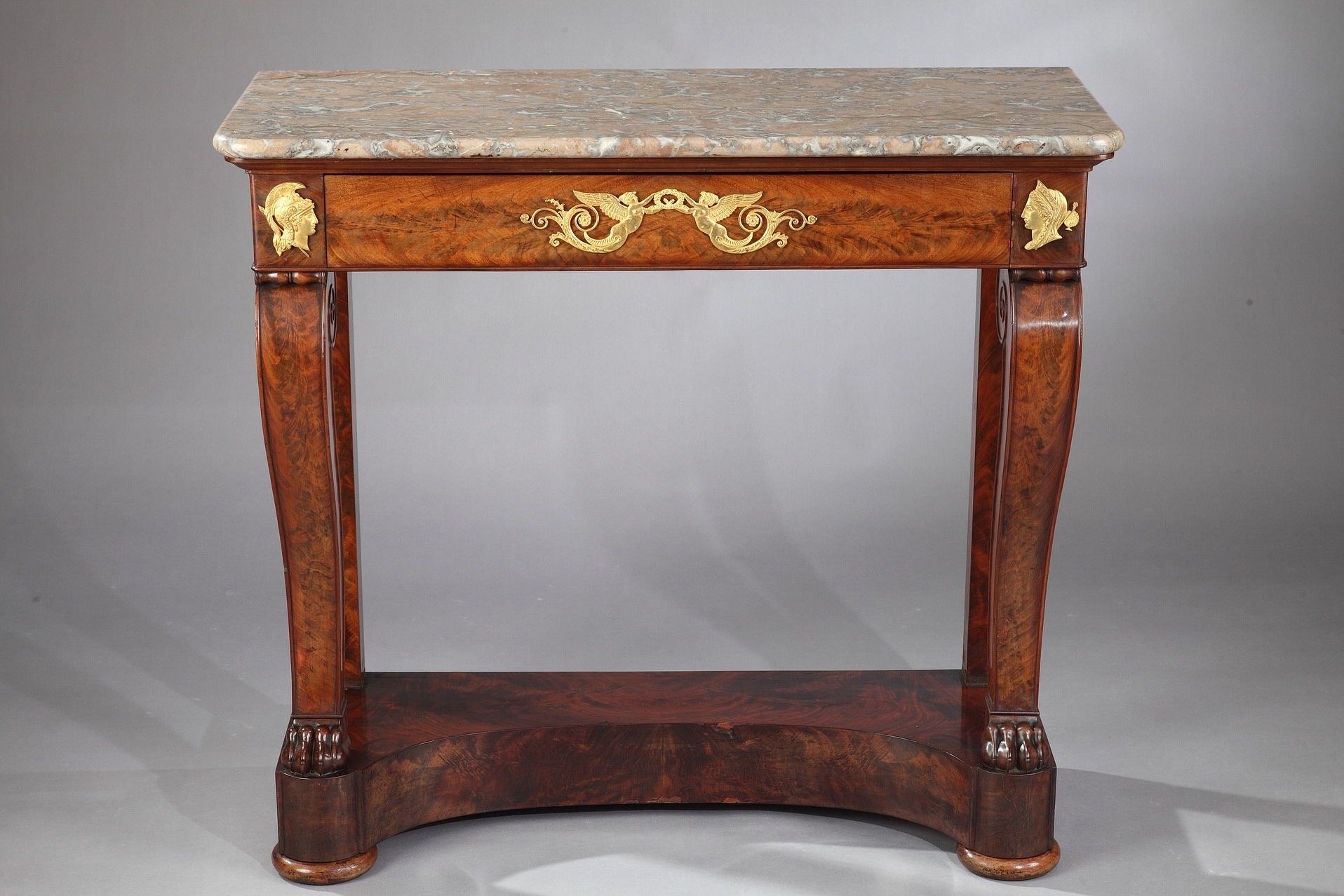
The Empire console , massive and stately, is often rectangular, sometimes semicircular. The marble top is supported by a wide mahogany decorated with bronzes depicting antique effigies, swans, and allegorical figures. The four legs rest on a thick wooden plinth, replacing the stretcher of earlier periods. The front legs may be either sphinxes or caryatids in a sheath , or simply decorated with applied bronzes. They often terminate in claw feet. The back—positioned between the rear legs, which are always very simple—is often fitted with a mirror.
The Charles X console
During the Restoration period , narrow, rectangular consoles with softened corners retained the Empire while becoming more refined. The dark marble top was cut straight, but the sharp edges were softened by careful grinding. It rested on a wide frieze, decorated with an inlaid motif, supported by two curved consoles that sometimes joined the straight rear legs. A thick, slightly recessed plinth connected the legs. A mirror might be placed between the rear legs.
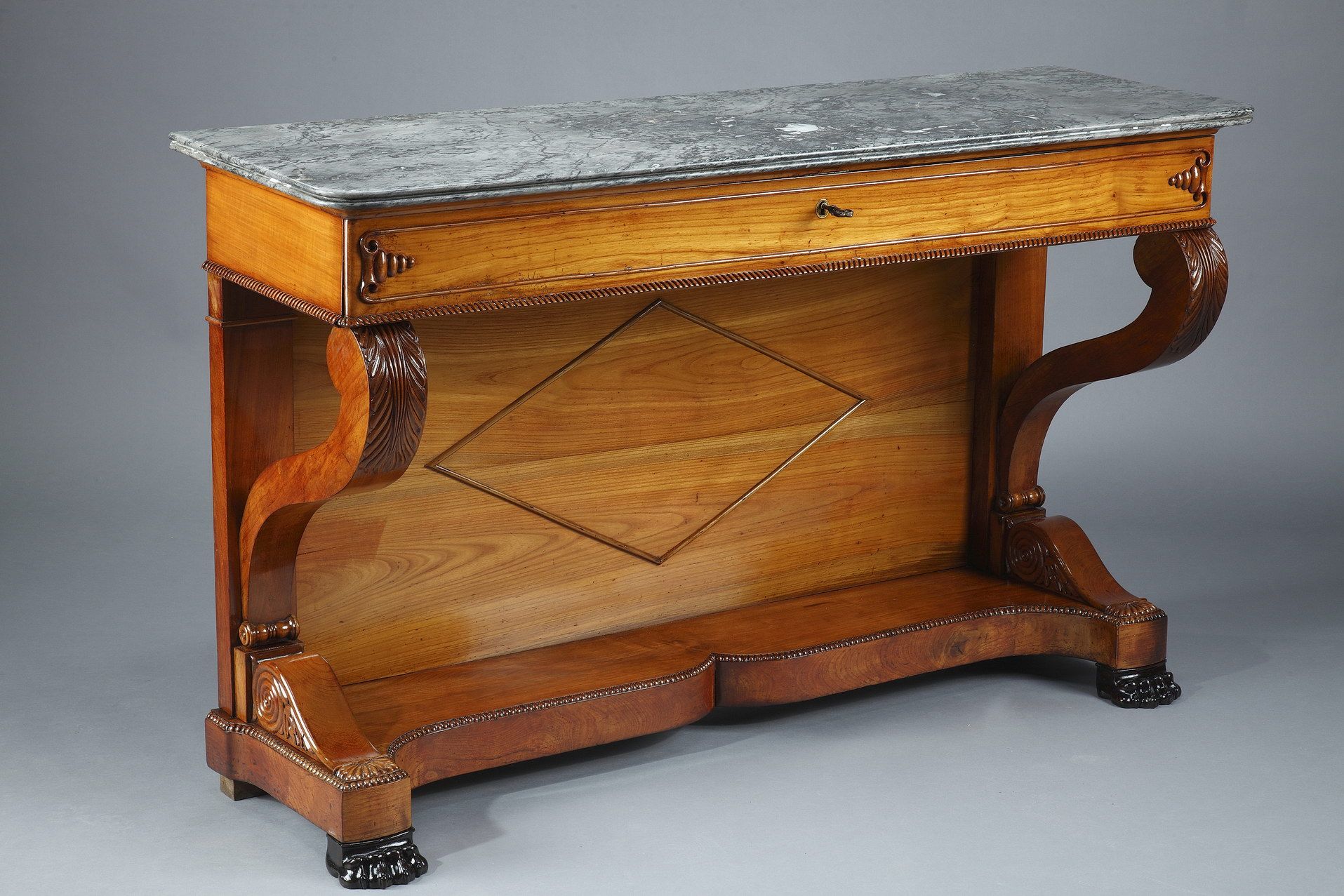 Cherry wood Restoration console
Napoleon III consoles
The Napoleon III saw a marked preference for small tables, consoles, and pedestal tables. The most interesting consoles were rather heavy pieces of furniture, with a long rectangular top resting on caryatids. Some were crafted entirely from gilt bronze, others from painted cast iron.

The consoles illustrate Napoleon III's taste for pastiche styles , a taste enthusiastically embraced by the bourgeoisie. Wall-mounted consoles and consoles in the neo-Louis XV, neo-Louis XVI, or Empire styles were manufactured there.


