

Edition Bronzes in 19th Century France
27.12.12
Edition bronze: a social phenomenon
Small -scale sculpture or bronze editions are a surprising phenomenon due to their scale and the variety of technological and commercial means employed, and their products have always been sought after in the art market. The bronze edition industry began in the 1830s and 1840s and its success was meteoric. According to Bernard Metman's definition, "small bronzes" include "not only works created by the artist to be statuettes, but also life-size or monumental works, commissioned by the State or a community (...) which, reduced by the publisher, became small sculptures suitable for decorating interiors" [Metman, p. 219].
A new art economy
The bronze edition was made possible thanks to three factors: firstly, the progress made in the sand casting which made it possible to reproduce works in a large number of copies without having to make a new model for each one; secondly, the apparatus invented by Achille Collas in 1839 which made it possible to reproduce, reduce or enlarge the models mechanically and finally, the contracts established between artists, founders and merchant-publishers, who joined forces in order to meet the growing appeal of the bourgeoisie for this small-scale statuary.
In the early days of the bronze industry, artists would grant one or more publishers the right to reproduce one or more works in a specific size and material. Some sculptors even went so far as to grant the publisher all reproduction rights to their work in any size and by any means. Sometimes, the publisher was authorized to make modifications to the original models for commercial reasons, such as creating ornaments for clocks, vases, and candelabras.
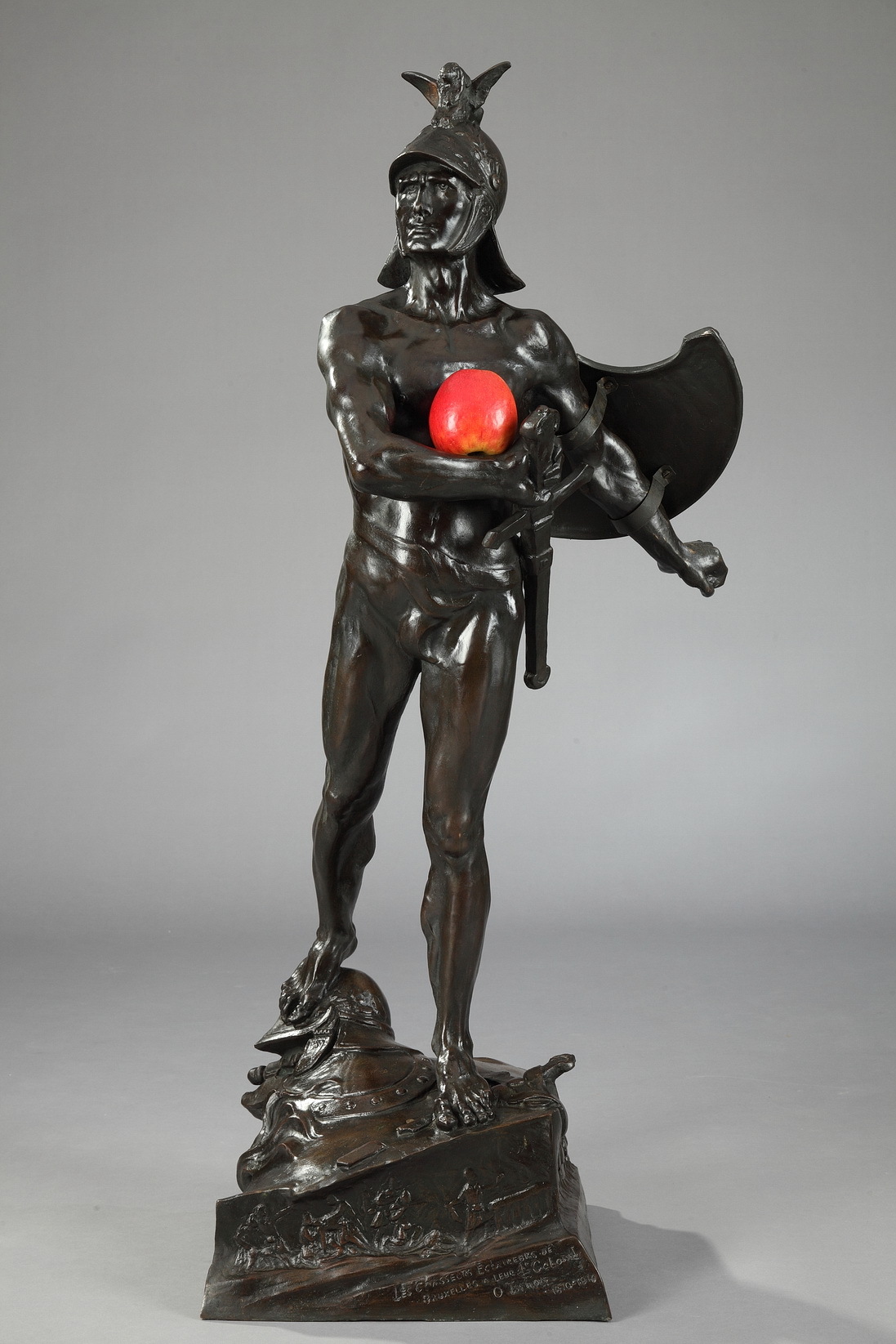
"The Warrior" by Auguste Wever
The considerable number of small bronzes produced in the 19th century is thus characterized by the absence of the original artist's involvement in the reproduction process. Indeed, artists controlled neither the number of casts made from their works nor their quality. For the most part, it was a matter of producing to meet the ever-increasing demand in the last decades of the century.
First, the publisher buys the desired number of models from the sculptor, along with the right to reproduce them in order to have the bronzes cast by a foundry. Later, the foundry itself becomes the artist's publisher. It informs the artist about public taste and publishes catalogs where the limited-edition bronzes are presented in various versions and sizes.
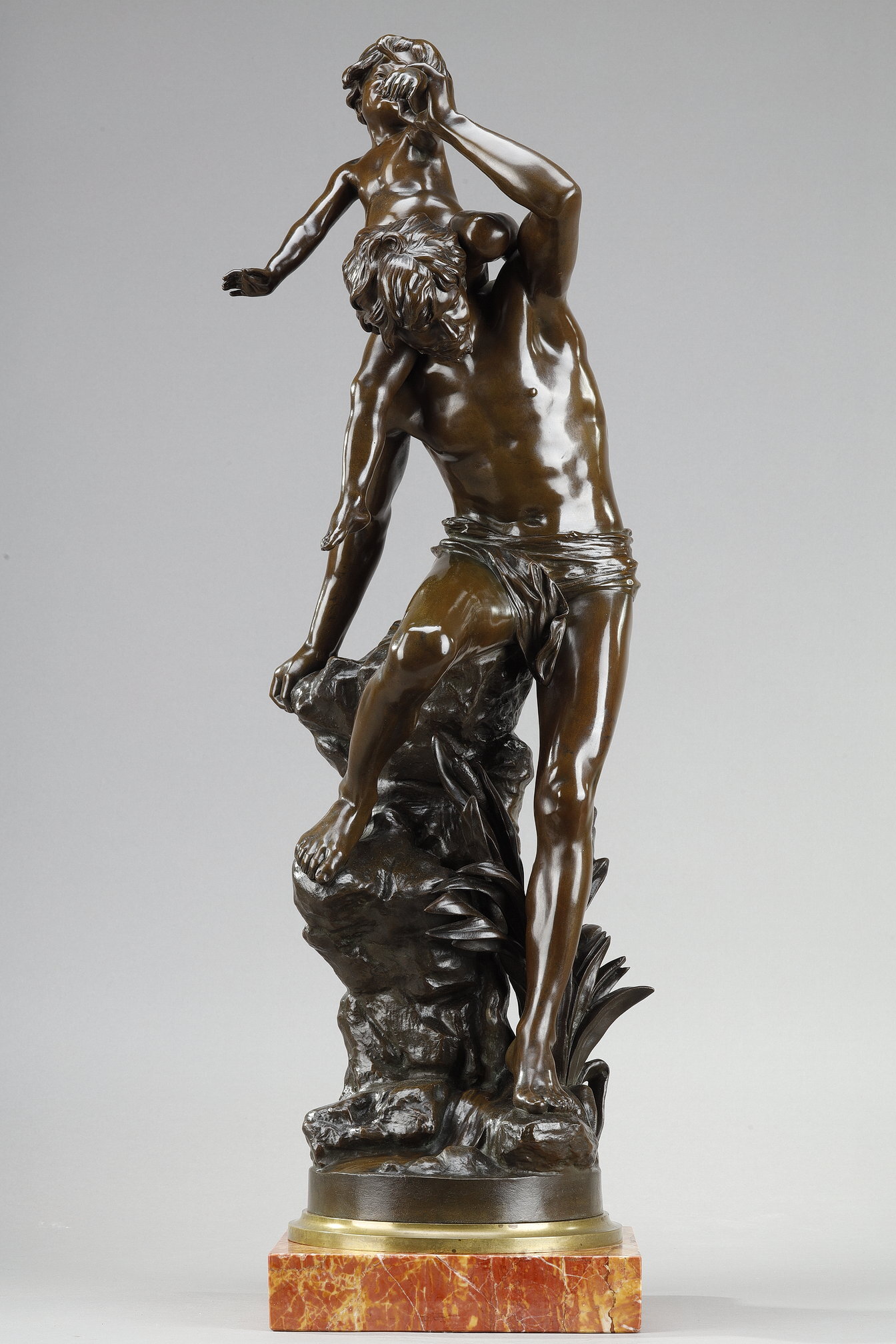
Bronze by Gaston Leroux
Successful bronze sculptures by Pigalle , Pierre-Jules-Mène are marketed in several dimensions and multiplied with precision for an affordable price by major foundries such as Ferdinand Barbedienne, the Susse brothers and Thiébaut, the three great specialists in bronze figurines with unlimited editions.
The sculptor can only control each print produced from their works when the editions are limited. This concept of limiting and numbering the prints only appeared at the end of the 19th century and gradually became established. Each print then bears a serial number and generally the total number of the edition, which, in principle, should not be exceeded. These numerical limits now become a decisive factor in establishing and guaranteeing the authenticity or quality of a work.
Ancient and mythological subjects
Among the most common themes addressed by foundry workers were the reproduction of antique or ancient works in reduced dimensions. Once these works had fallen into the public domain, foundry workers took the liberty of reducing and casting them, thus allowing their wider distribution.
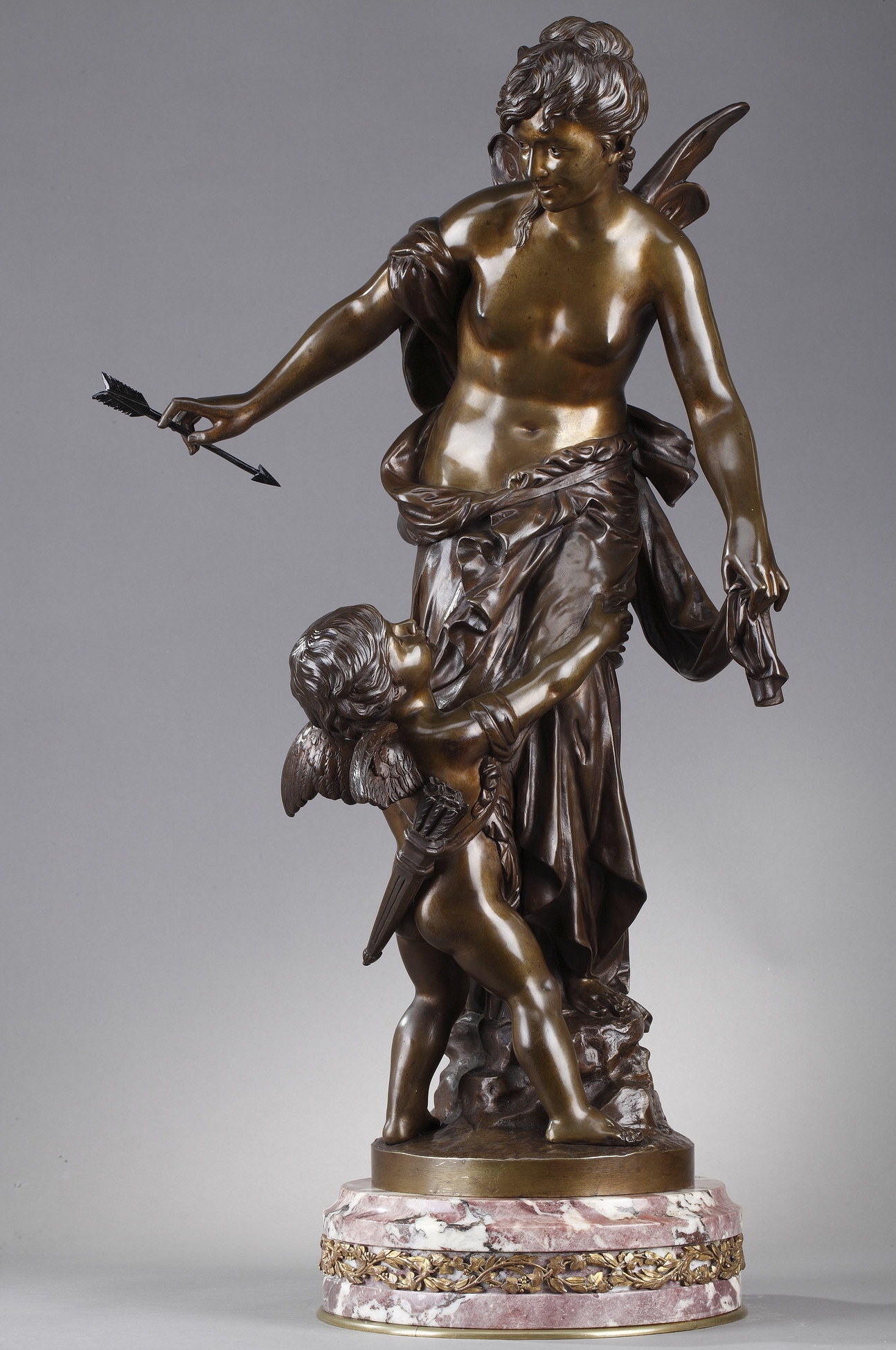 Psyche and Cupid, signed Jean Bulio
The Barbedienne foundry reproduced all kinds and styles in bronze: antique statues including the Apollo Belvedere , the Venus de Milo , and the Discus Thrower ; Renaissance works such as Michelangelo's Moses Guillaume Coustou's Horses of Marly The Rape of Proserpine and Mercury after Giambologna . These statues, copied identically or with variations, adorned mantelpieces, chests of drawers, shelves, display cases, and various other pieces of furniture, the sumptuousness of which was magnificently described in Sentimental Education .
Neoclassical works from the early 19th century were widely reproduced during the Second Empire and the Third Republic. These included numerous satyrs and bacchantes in the style of the sculptor Clodion (1738-1814) , as well as genre statuettes whose subjects, inspired by antiquity or everyday life, served as a pretext for depicting the female form. James Pradier, in particular, distinguished himself with his production of sensual figurines and odalisques.
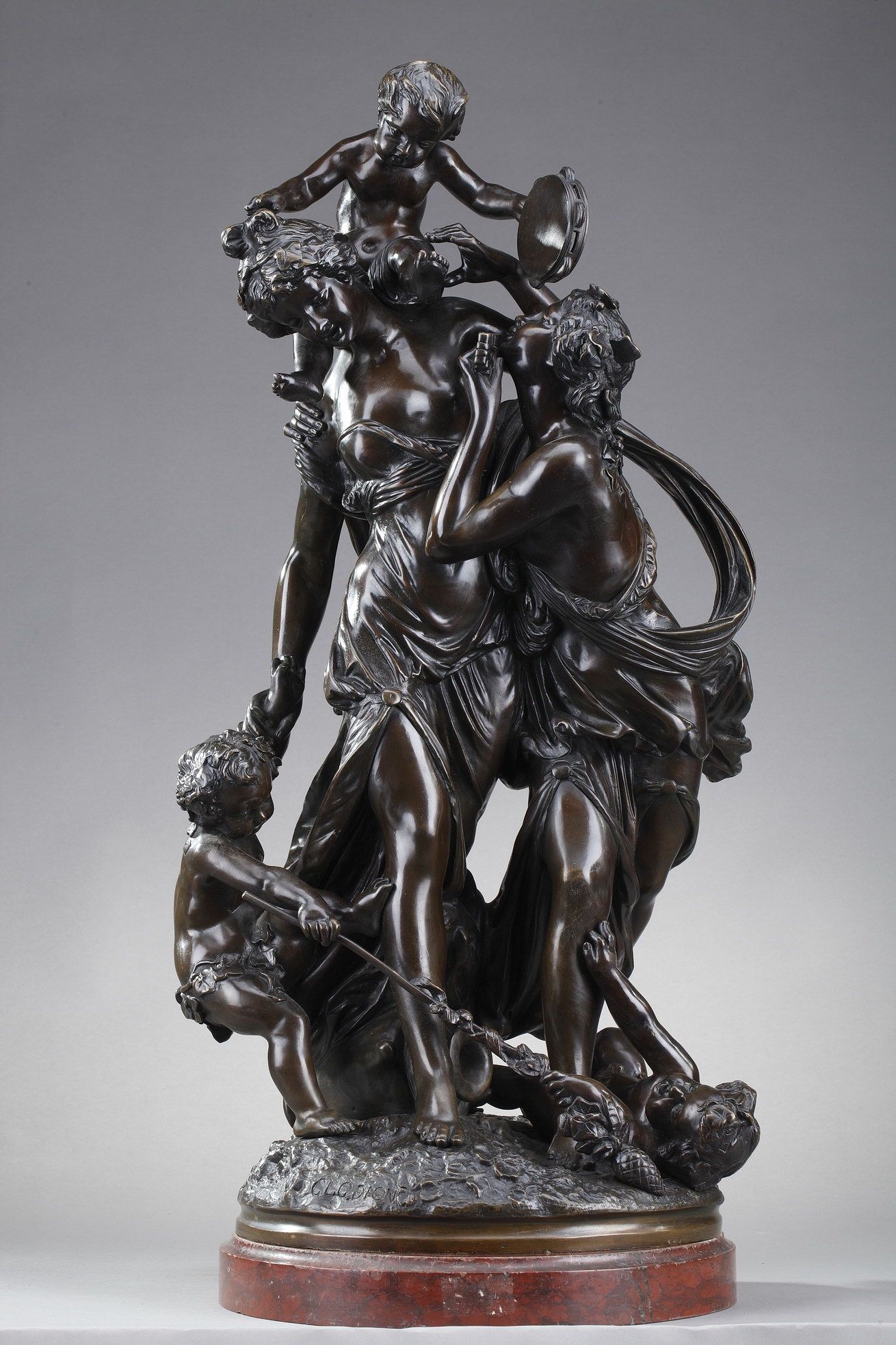 "Bacchantes and dancing putti" after Clodion
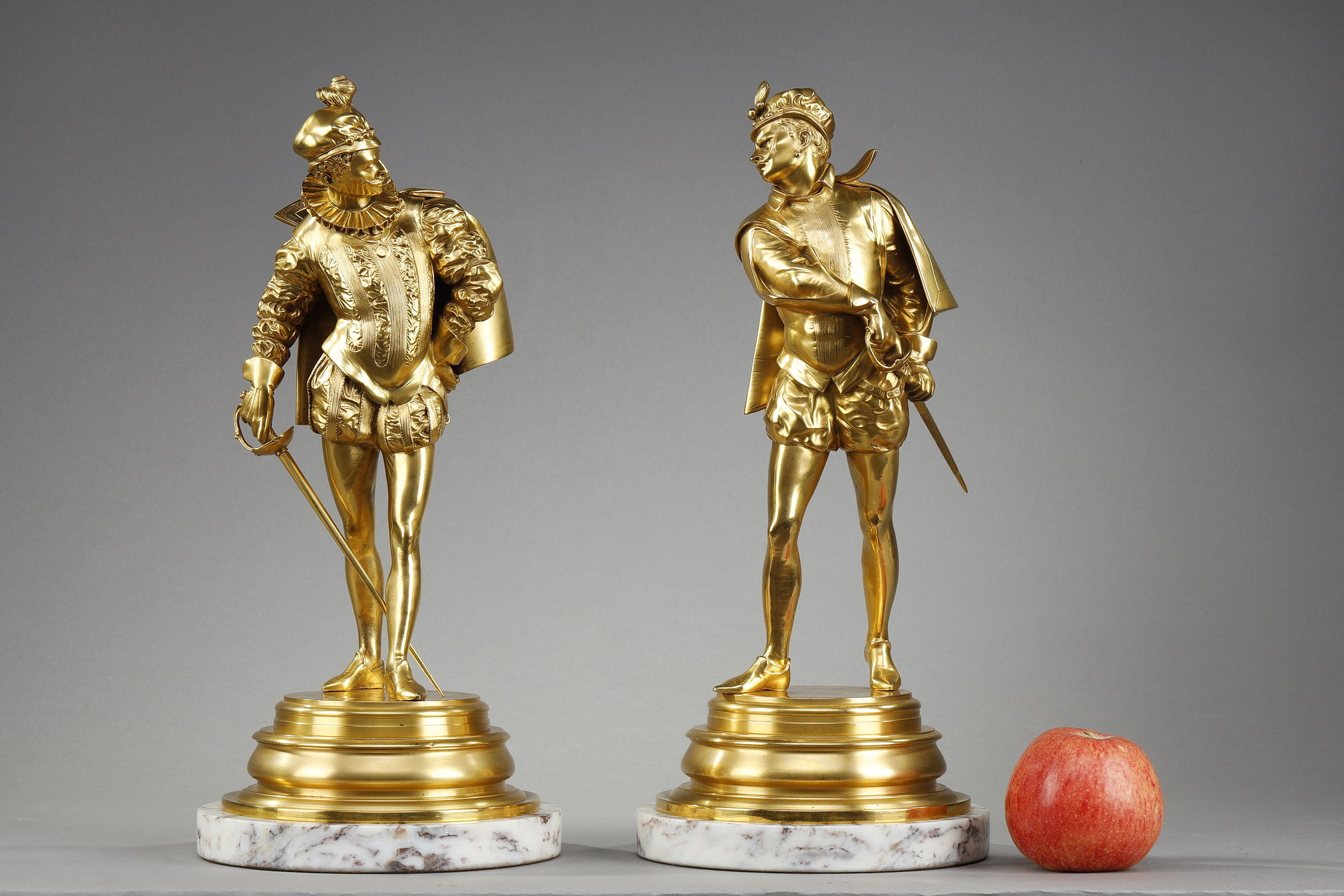
Small bronzes inspired by antiquity were also cast, featuring Greek heroes and such as Augustus's Warrior by de Wever (1836-1910). This marked a revival of the individual portrait, depictions of military exploits, and national heroes symbolized by gods or heroes from ancient mythology, or even by effigies of Roman emperors.
These figures, either nude or dressed in togas with draped effects, dancing and illustrating mythological scenes , appealed to a cultivated clientele interested in finding at home the works admired in museums or in books.
The animal statuette
Some contemporary sculptors execute or have executed reductions of their statues and monumental groups presented at the Salon, while others create small-scale works intended specifically for the edition and ornamentation of clocks, bedrooms, or living rooms.
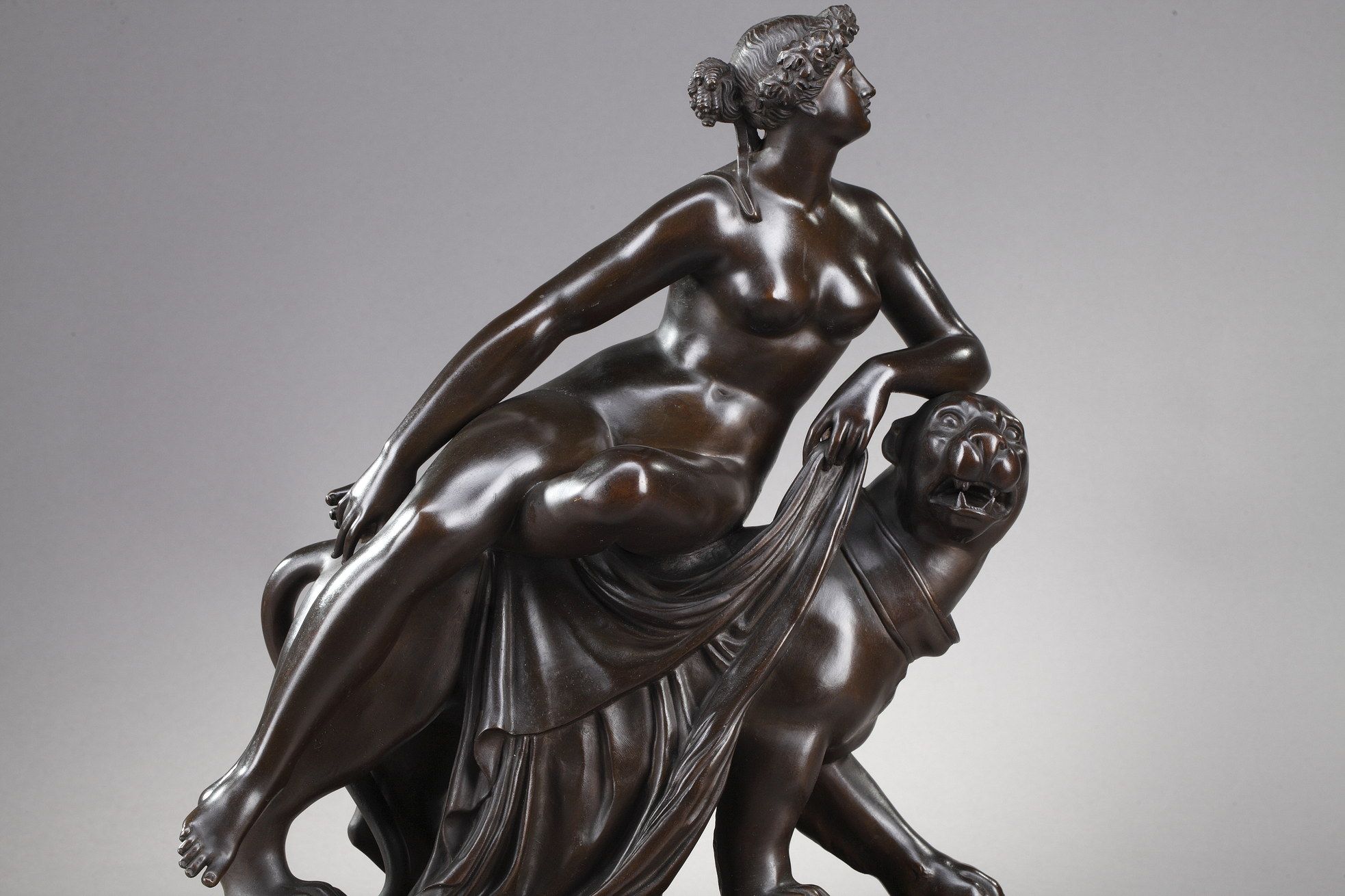
Bronze statue of Ariadne riding a panther
The most famous of these artists is Antoine-Louis Barye, whose lions, deer, and hunting dogs were found in every bourgeois home of the time. The vogue for animal sculpture, championed by Barye, continued into the early decades of the 20th century with artists like François Pompon and Nerid.
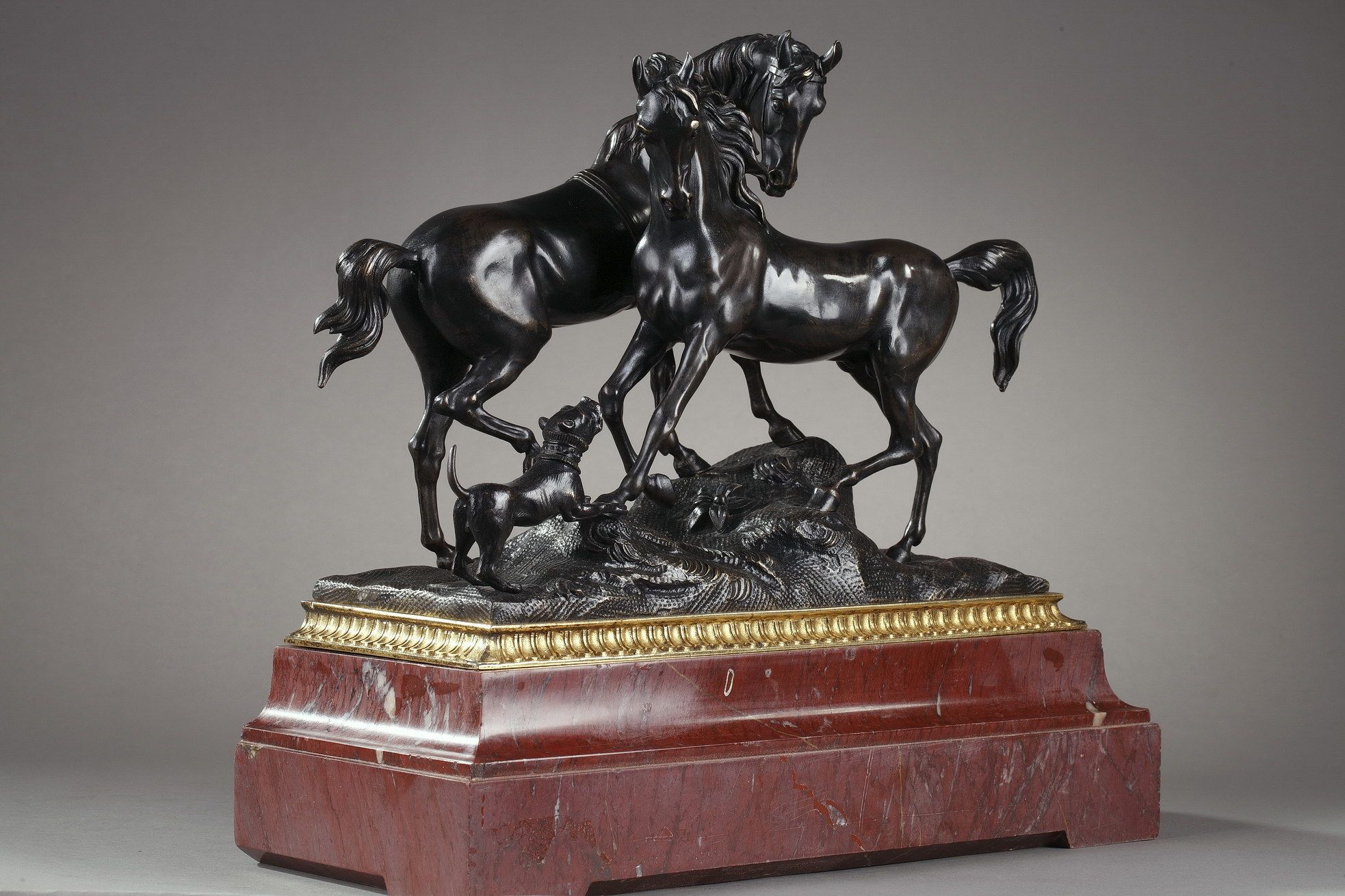 Bronze animal sculpture, "The Embrace", 19th century
The small bronze, a decorative object
Small bronze statuettes are also used as ornaments on a variety of objects , from writing desks and vases to mantelpieces, clocks, and ewers, and their decorative vocabulary is diverse. Most often, they depict plant themes, animals, humans, or fantastical figures such as lions, Cupids, dolphins, sphinxes, or the female form.
Bibliography
- DEVAUX, Yves, The Universe of Bronzes and Ornamental Cast Irons (Masterpieces and Curiosities 1850-1920) , Paris, Pygmalion, 1978.
- KJELLBERG, Pierre, The bronzes of the 19th century. Dictionary of sculptors , Paris, Les Editions de l'Amateur, [1989].
- LEBON, Elisabeth, Dictionary of Art Bronze Founders, France 1890-1950 , Perth, Marjon, 2003.
- METMAN, Bernard, “Small sculpture in the 19th century. The publishers”, in Documents on French sculpture. Directory of 19th century founders. Archives of French art, vol. XXX, Nogent-le-Roi, Libr. des Arts et Métiers, 1989, pp. 175-218.


